A water heater leaking from bottom needs quick attention. Water may come from a valve, pipe, loose fitting, or failed tank. Shut off the water and energy supply only when safe. Then arrange an inspection if the leak keeps going, spreads, or has no clear source.
Even a small puddle can damage floors, walls, and nearby equipment. Water can move under flooring or into a wall before damage is easy to see. Limit the water flow first, and do not touch unsafe electrical or gas parts.
Table of Contents
- What should you do when a water heater is leaking from the bottom?
- Why is water coming from the bottom of a water heater?
- Can a water heater tank leak from the bottom?
- How can you tell where a water heater leak is coming from?
- Can a leaking water heater be repaired?
- Should you repair or replace a water heater leaking from the bottom?
- What should you expect from professional water heater service?
- Frequently Asked Questions
What should you do when a water heater is leaking from the bottom?
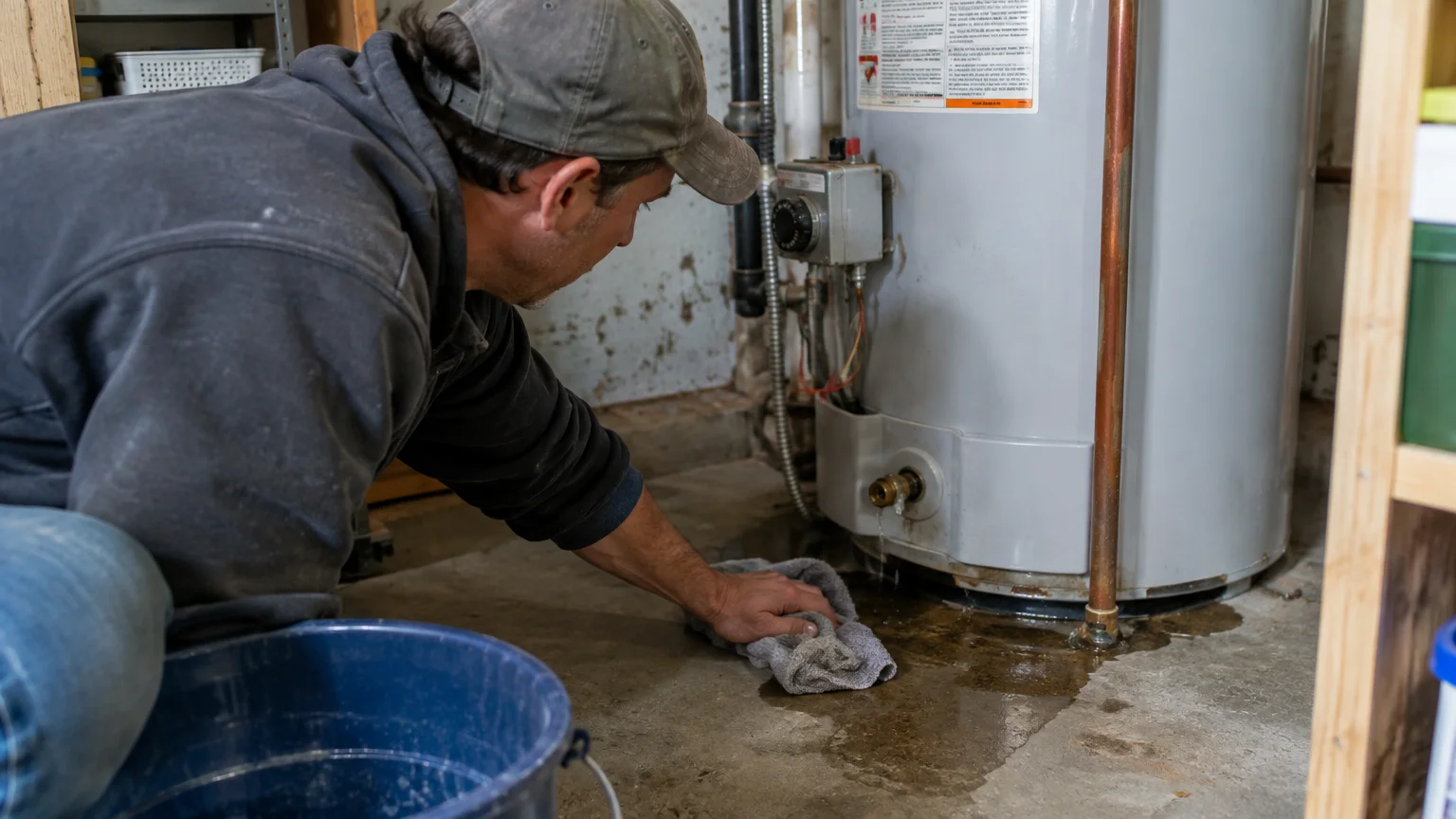
First, keep people and pets away from the wet area. Move boxes and other items away from the water if you can do so safely. Never walk through standing water near electrical equipment. If water is spreading fast, leave the area and get urgent help.
How to shut off the water and power safely
Find the cold-water pipe that enters the top of the tank. Turn its shutoff valve clockwise until it stops. If that valve does not work, you may need to shut off the main water supply for the home. Open a hot-water tap briefly only when there is no burn risk.
For an electric water heater, turn off the matching breaker. For a gas water heater, use the maker’s safe control setting. Close the gas supply only when you can do so safely. Do not work on gas controls, wiring, burners, or flue parts without proper training.
When a bottom leak requires urgent plumbing help
Get urgent help when water is spreading, the tank is bulging, or the leak is strong. A shutoff that will not stop the flow also needs prompt attention. Burning smells, sparks, damaged wiring, or a gas smell create added danger. Leave the area and contact the proper emergency service if gas may be escaping.
Highland Village Plumbing helps property owners with water leaks and other plumbing issues. After the system is isolated, a homeowner may wipe up a small amount of water. Do not remove covers, open gas controls, or drain a hot tank without clear instructions.
Why is water coming from the bottom of a water heater?
Water at the base does not always mean the tank has failed. It may come from a drain valve, a temperature and pressure relief valve, a pipe joint, or water running down the outside. The highest wet point often gives the best clue about the source.
Leaking drain valve or temperature and pressure relief valve
The drain valve sits near the bottom of many storage tanks. It may drip when it does not close fully or when its inner seal wears out. Do not use a cap as a lasting repair. A cap can hide a damaged valve and leave pressure problems unseen.
A temperature and pressure relief valve is often called a T&P valve. It protects the tank from unsafe heat or pressure. Water may leave through its discharge pipe when the valve opens. Never block, plug, or remove this pipe. A valve that keeps releasing water needs professional testing.
Loose connections, corrosion, and damaged fittings
Water can also come from the cold-water inlet, hot-water outlet, flex connector, shutoff valve, or nearby pipe. A loose connection may be repairable. Corrosion can weaken the fitting or pipe and make a simple repair harder. Water can travel along insulation or the tank shell, making the bottom seem like the source.
Hard-water minerals can affect valves and fittings over time. Condensation can also form when cold water enters a warm room or tank. That moisture may collect under the heater without a failed part. Dry the area and watch it closely, but arrange an inspection if water returns.
Can a water heater tank leak from the bottom?
Yes. A storage tank may leak from the bottom when corrosion damages its inner lining or steel shell. Replacing an outside valve will not stop a leak in the tank wall. The tank holds water under pressure, so a failed shell is not a simple patch job.
How internal tank corrosion causes permanent leaks
Most tank water heaters have a protective lining and an anode rod. An anode rod is a metal part that corrodes before the steel tank does. Over time, the rod may wear down. The tank then has less protection from water damage.
Corrosion often begins inside the tank, where it cannot be seen. It may later cause rust-colored water, wet insulation, or a small hole. Water can collect under the outer jacket and appear only at the base. Anode Rod Replacement Water Heater service may help protect a sound tank, but it cannot restore a shell that has already failed.
Signs the storage tank has failed
A failed tank may show one or more of these signs:
- Water returns after the supply valve is closed and nearby fittings are dry.
- Rust streaks, wet insulation, or stains appear around the lower tank area.
- The tank shell shows corrosion, swelling, cracks, or a wet seam.
- The unit keeps leaking after valves or connectors have been repaired.
- Hot water becomes unreliable while the tank shows clear damage or age.
A leaking tank usually needs replacement instead of a lasting repair. Highland Village Plumbing can help Highland Village homeowners compare the current unit with suitable replacement choices. The choice should consider safety, hot-water needs, available space, and the condition of connected parts.
How can you tell where a water heater leak is coming from?
You can often find the source by drying the heater and checking each connection from top to bottom. Do this only after the water, gas, and electricity have been handled safely. The goal is to watch the leak, not take the unit apart.
Checking the tank, valves, pipes, and surrounding area
Use a dry cloth to check the cold-water inlet, hot-water outlet, relief valve pipe, drain valve, and nearby fittings. Look at the floor beneath the heater too. A small mirror may help you see the rear side without moving the unit.
Do not touch bare wires, burner parts, or hot metal. Do not force a corroded connection. If water comes from inside the tank jacket, the tank may be damaged. Photos can help a plumber understand the location before arriving, but photos cannot replace an inspection.
Why condensation can look like a plumbing leak
Condensation is water that forms when moist air touches a cooler surface. It may appear after a tank fills with cold water, during humid weather, or in a poorly aired space. Condensation usually leaves light moisture across several surfaces instead of one steady drip.
Dry the area and check it again after the heater runs normally. A steady stream, wet seam, or growing puddle is more likely to be a plumbing leak. Water damage around the base matters even when the first leak seems small. A plumber for water heater repair can trace hidden moisture and check connected pipes.
Can a leaking water heater be repaired?
Some leaks can be repaired when the tank is sound and the failed part is easy to reach. Common repairs include replacing a drain valve, changing a faulty relief valve, securing a connection, or repairing nearby pipework. The right repair depends on the source and the condition of nearby parts.
Leaks that may be fixed with parts or connections
A worn valve or loose connector may only need a part replacement. A technician will isolate the water, release pressure when needed, replace the part, and test the system. The technician may also check for corrosion. A new fitting may not seal well against a badly damaged pipe.
A homeowner can safely check for visible drips and remove light dust from the area. Simple upkeep includes keeping the heater easy to reach, watching for rust, and following the maker’s care instructions. Do not bypass safety valves or seal a leaking pressure outlet.
When repair is unsafe or unlikely to last
Repair is usually not a good choice when the tank shell leaks or the base is badly corroded. It is also less useful when several parts have failed. A patch, sealant, or clamp may hide water for a short time while pressure stays inside the tank. This can delay replacement and allow more property damage.
Gas, electrical, and pressure faults need trained service. Emergency Water Heater Repair may be needed when the leak cannot be controlled or the home loses hot water during a serious failure. The safest choice depends on an inspection, not the size of the first puddle.
Should you repair or replace a water heater leaking from the bottom?
Repair may make sense when the tank is healthy and one replaceable part has failed. Water heater replacement is more likely when the tank shell leaks, corrosion is widespread, or repairs keep failing. A professional can compare safety, reliability, capacity, and future upkeep.
How age, condition, capacity, and efficiency affect the decision
The heater’s age matters, but age alone does not decide the answer. A well-kept unit with a sound tank may only need a small repair. A newer unit with a damaged tank may still need replacement because the tank cannot be restored.
Capacity matters too. A unit that cannot meet household hot-water demand may still cause trouble after a leak repair. A replacement should match the number of people, fixtures, recovery needs, fuel type, venting, and space. Local rules may also affect the installation.
Tank versus tankless replacement considerations
A tank water heater stores hot water in an insulated vessel. It is familiar and may be simple to replace with a similar unit. It can suit homes with steady hot-water demand. A tankless water heater heats water as it moves through the unit. It saves space, but the home may need enough gas, electricity, water flow, and venting capacity.
Tankless hot water heater installation needs careful sizing. A unit that is too small may not serve several fixtures at once. A unit that is too large may require more system work than expected. Water Heater Installation should include safe connections, proper venting, temperature controls, and full testing.
What should you expect from professional water heater service?
Professional service starts with a safety check and a search for the leak source. The technician should inspect the tank, valves, connections, controls, nearby flooring, and signs of hidden water damage. The findings should explain whether water heater repair or replacement is the better choice.
Inspection, diagnosis, repair, or replacement steps
The visit may include shutting down the water and energy supply. It may also include testing visible parts, checking pressure-related valves, and looking for corrosion. If repair is suitable, the technician replaces the failed part and checks for leaks. If the tank has failed, the technician explains replacement options for the property.
The final cost is confirmed on a quote after the work and system needs are clear. Costs vary with parts, unit size, access, damage, urgency, fuel type, and installation changes. Replacement usually involves more work than a single valve repair because removal, new connections, venting, and testing may all be needed.
How to prevent future leaks and water damage
Regular checks can find small problems early. Keep the area clear, look for dampness or rust, and learn where the water and energy shutoffs are. Follow the manufacturer’s maintenance advice and have safety parts checked when a problem appears.
A drain pan and a suitable discharge route may help limit damage when local rules allow them. They must be installed correctly. Leak alarms can give an early warning, but they do not replace a working shutoff. Property owners should share shutoff steps with tenants and staff.
Key takeaways
- Shut off water and energy safely when a leak appears.
- A bottom puddle may come from a valve, fitting, pipe, or tank.
- A leaking tank shell usually needs replacement, not a patch.
- Homeowners can observe and clean safely but should not open unsafe equipment.
- Proper sizing and installation matter when choosing tank or tankless water heaters.
Frequently Asked Questions
Is a water heater leaking from bottom always an emergency?
Not every small drip is an immediate crisis, but every leak needs attention. A steady flow, spreading water, gas smell, spark, damaged wire, or failed shutoff needs urgent help. Isolate the system only when safe. Protect the area and avoid hot, electrical, or gas parts.
Can a homeowner fix a leaking water heater valve?
A homeowner can check for a visible drip and see whether the supply valve is closed. Replacing a valve involves pressure, hot water, and sometimes nearby gas or electrical equipment. Use a qualified plumber when the valve is stuck, corroded, hot, or still leaking after isolation.
How long can a leaking water heater keep working?
There is no safe set time. A small fitting leak can worsen without warning. A tank leak means the pressure vessel has failed. Continued use may damage floors, walls, or electrical parts. Handle the water and energy supply safely, then arrange prompt professional diagnosis.
Is a leaking water heater worth repairing?
It may be worth repairing when the tank is sound and the problem is a replaceable valve, connector, or pipe fitting. Replacement is more suitable when the tank shell leaks, corrosion is widespread, or failures return. The best choice depends on condition, capacity, safety, and future reliability.
Who can help with a leaking water heater in Highland Village?
Highland Village Plumbing provides local guidance for water heater leaks, repairs, and replacement decisions in and around Highland Village. Service areas may include Highland Shores, Castlewood, Lewisville, Flower Mound, Double Oak, Copper Canyon, and nearby communities. A technician can identify whether water comes from a valve, fitting, pipe, or tank and explain the next safe step.
Conclusion
A water heater leaking from the bottom should never be ignored. The cause may be a loose connection or a failed tank. Safe shutoff steps, careful checks, and timely service can limit damage. They can also help property owners choose a lasting repair or replacement.
Contact us to arrange professional help for a leaking water heater in Highland Village.