Often, you can unclog a toilet without a plumber when the blockage is small and affects only one toilet. A flange plunger can clear waste or extra toilet paper. Stop if water rises, other drains back up, or plunging fails. Those signs may point to a deeper drain problem that needs a plumber.
Table of Contents
- Can you unclog a toilet without a plumber?
- What should you do first when a toilet is clogged?
- How do you unclog a toilet with a plunger?
- Can hot water or dish soap unclog a toilet?
- What should you do if plunging does not work?
- How can you tell whether the blockage is in the toilet or drain line?
- When should you call a plumber for a clogged toilet?
- Frequently Asked Questions
Can you unclog a toilet without a plumber?
Yes. Many homeowners can clear a simple toilet clog with a flange plunger. A flange plunger has a narrow rubber part that fits into the toilet drain. It can help when the clog began after a regular flush and other drains work as usual.
When a DIY approach is reasonable
A simple clog may come from too much toilet paper or waste. The bowl may drain slowly, then return to its usual level. If the water is not close to the rim and other fixtures are working, a careful try with a plunger is reasonable.
Some safe first steps need no special tools. Stop flushing, shut off the toilet’s water supply if needed, and clear items from around its base. You do not need to open pipes for these checks. They can also help prevent a small clog from turning into a wet mess.
What to check before you start
Look at the water level and see if it is rising or falling. Check nearby sinks, tubs, and showers for slow drainage or bubbling. If more than one fixture has trouble, the blockage may be farther down the drain line.
Do not flush again just to test the toilet. Another flush could send water over the rim. In Highland Village, one slow toilet may be a simple clog, but trouble in other fixtures calls for more care. Highland Village Plumbing helps property owners figure out when a safe DIY attempt is not enough.
What should you do first when a toilet is clogged?
Stop flushing and ask everyone to leave the toilet alone for now. If the water is rising, turn off the shutoff valve behind the toilet. This small valve stops water from flowing into the tank and can help prevent an overflow.
How to prevent an overflow
Turn the valve clockwise, gently, until it stops. Do not force it if it feels stuck. If the bowl keeps filling, lift the tank lid and press the rubber flapper over the tank opening. The flapper is a hinged seal that lets tank water flow into the bowl when you flush.
Keep towels close and move rugs or other items that water could damage. Put on rubber gloves before touching the toilet or cleaning up. If water spills onto the floor, stay away from electrical items in the wet area. Clean and dry the floor after the clog is gone.
What to gather before clearing the blockage
Get a flange plunger, gloves, and old towels ready. A bucket can hold a little water if you need to lower the bowl level. Clear the space and keep children and pets away until you finish cleaning.
Do not pour drain cleaner into the toilet before you plunge. Some products can splash back or react with other cleaners. Never mix cleaning products. If you already added a cleaner, read its label and do not plunge if it could splash on anyone. Pause and ask a professional for advice if you are not sure what is in the bowl.
How do you unclog a toilet with a plunger?
A flange plunger can clear many clogs when it seals around the toilet drain. Place its rubber cup over the opening so water fills the cup, not air. Then push and pull with steady strokes while keeping the seal in place.
How to choose and position the right plunger
Choose a toilet plunger with a raised flange, not a flat sink plunger. The flange helps make a seal inside the curved toilet drain. If the bowl is nearly full, carefully remove some water first so it will not splash over the rim.
Set the plunger over the drain opening and tilt it a little to let trapped air out. When the cup fills with water, press down gently to make a tight seal. Keep the handle upright so the cup stays in place. If the seal breaks, the plunger will move water poorly and may splash dirty water onto the floor.
Steps for plunging safely and effectively
Use steady movements instead of sharp, hard jabs. Push down and pull back without breaking the seal. After several strokes, lift the plunger slowly and watch the water. If it starts to drain, wait for the bowl to settle before trying one test flush.
Stop if the water rises near the rim, the plunger will not seal, or the toilet makes odd bubbling sounds. Do not keep plunging for a long time if nothing changes. You can try again carefully if the water level is safe and only this toilet seems affected. If the clog comes back, the cause may need a closer look.
Can hot water or dish soap unclog a toilet?
Warm water and a little dish soap may loosen a soft blockage. This method does not work for every clog and cannot clear a hard object. Use warm water, not boiling water, and stop if the bowl is nearly full.
When this method may help
Dish soap can make the contents in the bowl more slippery. Add a small amount to the water, then pour warm water from a low height. Let it sit briefly before using a plunger. Pour slowly so you do not splash or raise the water too high.
This may help if the toilet became slow after a large amount of waste or paper. It is less likely to work if a toy, wipe, or other solid thing is stuck. Never add more water when the bowl is full. Only try this step when the bowl has room and you can pour with care.
Why boiling water and harsh chemicals are risky
Boiling water can crack a toilet bowl because of the sudden heat. It can also burn your skin if it spills. Hot tap water is safer, but still needs careful handling.
Chemical drain cleaners may harm toilet parts or cause dangerous splashes. They can also make later work unsafe if a plumber needs to open the drain. Do not mix cleaners, bleach, or other household products. If you have used a cleaner, tell the plumber what it was and follow the product label. A blocked toilet is not worth risking burns or chemical exposure.
What should you do if plunging does not work?
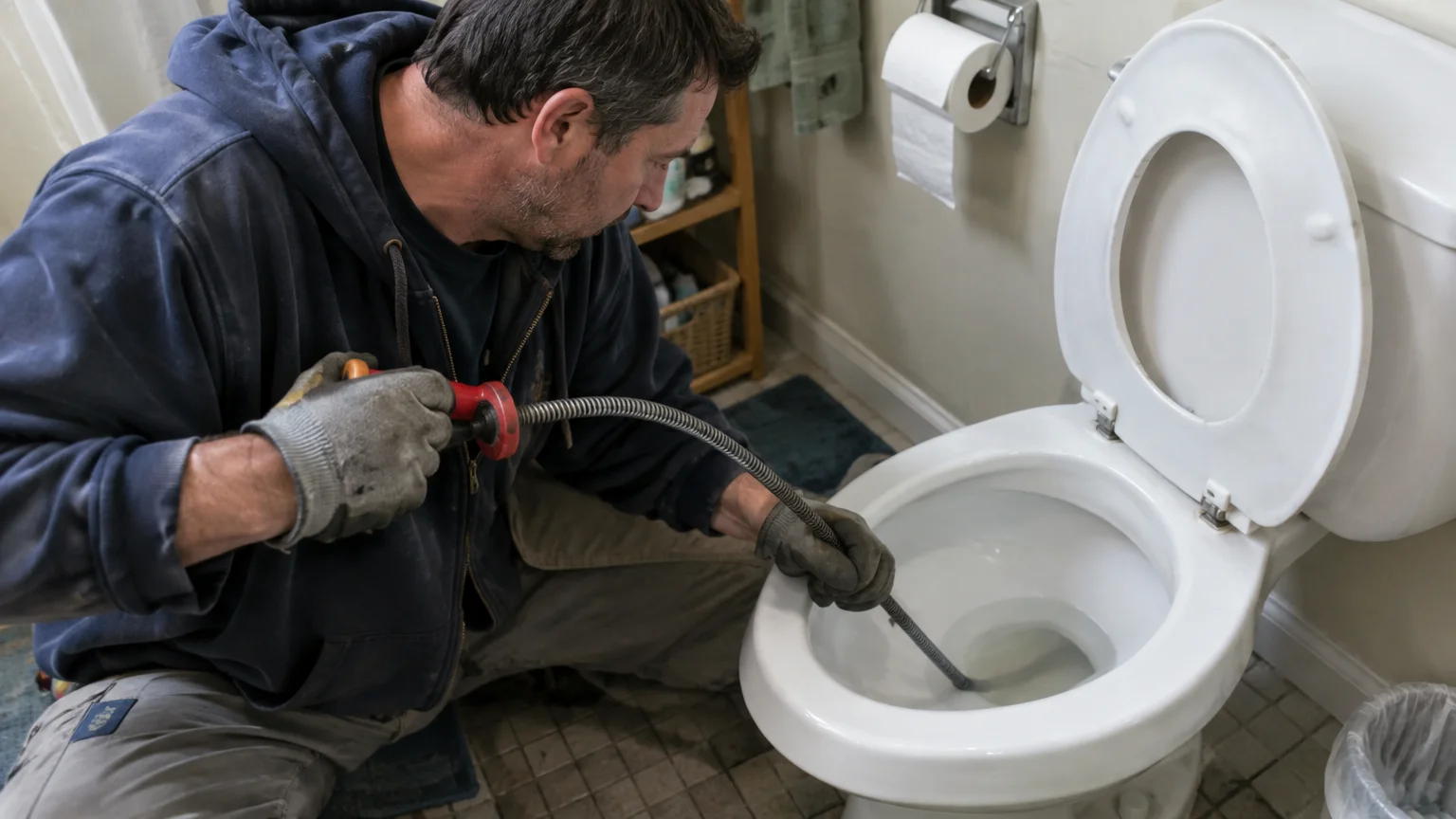
If careful plunging fails, stop and look for signs of a deeper blockage. A toilet auger may clear a clog in the toilet’s built-in trap. An auger is a flexible tool that reaches into a drain to break up or pull out a blockage.
How to use a toilet auger without damaging the bowl
Choose an auger made for toilets, with a sleeve that protects its cable. Place its curved end in the toilet drain and feed it forward slowly. Turn the handle as the cable moves, and follow the tool’s directions. Do not force it if it catches or feels stuck.
Pull the tool back with care and check for anything it brought out. Clean it as the maker directs, then wash your hands. Do not push a hard object farther into the pipe. If the auger will not move through the drain with gentle pressure, stop to avoid scratching the bowl or harming the toilet.
When not to try another DIY method
Do not use a toilet auger if the toilet is cracked, leaking at its base, or already overflowing. Stop if other drains back up or wastewater comes into a tub or shower. These signs may point to a shared drain or sewer problem, not just a toilet clog.
A plumber who works on blocked drains can check whether the problem is in the toilet or farther along the line. Drain Cleaning may help when buildup or a blockage affects connected pipes. A toilet that clogs again and again also needs attention, even if plunging clears it for now. Repeated attempts can waste time and make a hard blockage worse.
How can you tell whether the blockage is in the toilet or drain line?
A toilet-only clog usually affects one toilet and starts after it is used. A drain line problem may affect several fixtures or cause water to rise in another place. Check nearby sinks, tubs, and showers before trying more DIY work.
Signs of a toilet-only clog
The clog is more likely to be in one toilet if nearby drains work normally. The bowl may drain slowly after a flush, while sinks and tubs empty as usual. A single clog after too much paper or waste may clear with a plunger.
An object that fell into the bowl may also cause a clog. Do not flush if you think a small item is stuck. Flushing could push it farther into the drain. If you cannot safely reach it, or a plunger does not clear the toilet, ask a plumber to check it.
Warning signs of a shared drain or sewer problem
A shared drain carries water from more than one fixture. Slow sinks, gurgling tubs, or water rising in a shower when the toilet flushes may point to a blockage in that line. A sewer backup happens when wastewater cannot flow out and comes back through a drain.
Stop using water if several fixtures back up or sewage appears indoors. Keep people and pets away from the area. Do not try to clear a suspected sewer blockage with chemicals or repeated flushing. Highland Village Plumbing can help Highland Village homeowners see whether a clogged toilet needs toilet repair or a wider drain check. Tell the plumber which fixtures have trouble and when it began.
When should you call a plumber for a clogged toilet?
Call a plumber if the toilet keeps clogging, a plunger and safe auger attempt fail, or other drains have trouble. Get help quickly if water overflows, sewage comes up, or the toilet leaks around its base. These problems may cause water damage or expose people to dirty water.
Key takeaways
- Stop flushing as soon as the toilet clogs.
- Use a flange plunger for a simple clog in one toilet.
- Avoid boiling water, harsh drain cleaners, and forceful tools.
- Check nearby fixtures for signs of a shared drain problem.
- Call a plumber if the clog returns or sewage backs up.
What information to share when requesting professional help
Explain whether one toilet or several fixtures are affected. Say when the problem began and what happens after a flush. Mention any plunging or auger attempts, and tell the plumber if you added a cleaner. These details can help the plumber understand the problem before arriving.
If the toilet is overflowing, shut off its water supply if you can do so safely. Keep people away from wastewater and avoid using other fixtures if several drains are backing up. Highland Village Plumbing serves homeowners and property owners around Highland Village, including Highland Shores and Castlewood, as well as nearby communities. Contact us for help with a clogged toilet that needs professional care.
Frequently Asked Questions
What should someone do if a toilet is not flushing?
Stop flushing if the bowl is full or the water is rising. Check whether the shutoff valve is open and whether the tank has water. If the tank works but the bowl will not drain, treat it as a possible clog. Use a flange plunger only when the water level is safe.
Can dish soap help clear a toilet clog?
Dish soap may loosen a soft blockage, but it cannot clear every clog. Add a small amount with warm water only when the bowl has room. Never use boiling water, and do not mix soap with drain cleaner or other products. If the toilet still will not drain, stop and check for other signs.
Is it safe to use a toilet auger at home?
A toilet auger made for toilets can be used with care when the toilet is not cracked or overflowing. Follow its directions and do not force the cable. Stop if it catches, harms the bowl, or does not move the blockage. A plumber can handle a clog deeper in the drain.
What does it mean when several drains gurgle or back up?
Several slow or gurgling fixtures may point to a blockage in a shared drain or sewer line. Stop flushing and limit water use until someone checks the problem. If wastewater comes up through a tub, shower, or floor drain, keep people away and contact a plumber promptly.
When is a clogged toilet an emergency?
A toilet needs urgent help when water is overflowing, sewage is backing up, or a leak is causing damage. Shut off the toilet’s water supply if safe, and keep people away from wastewater. One slow drain with no leak or overflow is usually less urgent, but a clog that keeps returning still needs attention.
Conclusion
Many simple toilet clogs can be cleared at home with a flange plunger and careful steps. Stop if the toilet overflows, the clog returns, or other drains show trouble. Highland Village Plumbing can help property owners across Highland Village with stubborn blockages.
If you are unsure what is causing the clog, professional help can prevent a small problem from getting worse. Contact us today to discuss the next step with Highland Village Plumbing.