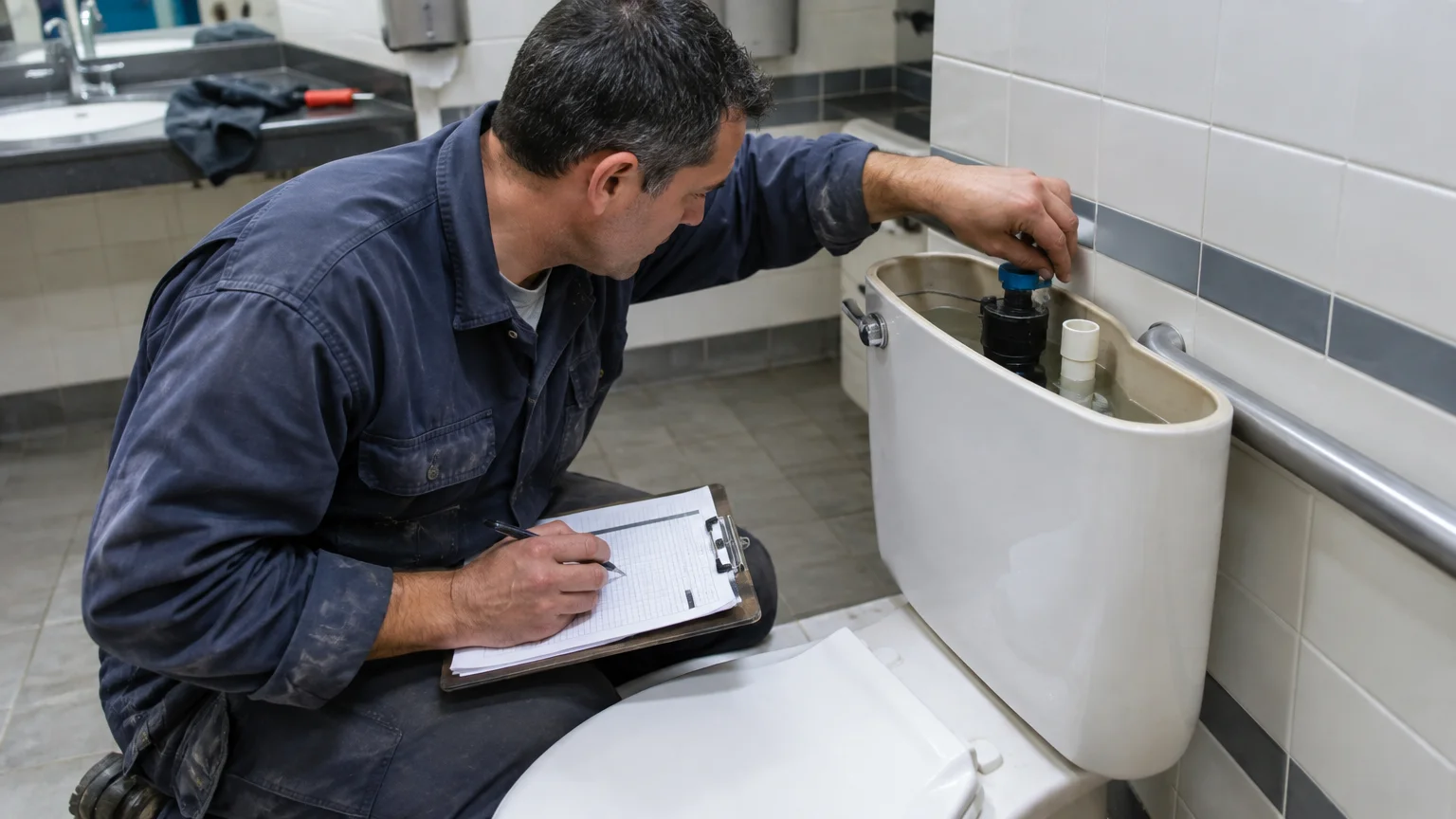
A running toilet commercial restroom issue can waste water and interrupt daily business. Common causes include a worn flapper, a faulty fill valve, or a flush part that no longer seals. Staff can listen and check safely, but repeated running or leaks need a plumber.
Table of Contents
- Why does a running toilet cost a commercial business money?
- What causes a toilet to keep running in a commercial restroom?
- How can businesses tell when a toilet is running?
- How can a running toilet affect restroom operations?
- Should a commercial running toilet be repaired or replaced?
- What should businesses do when a commercial restroom toilet keeps running?
- How can businesses prevent recurring commercial toilet problems?
- Frequently Asked Questions
Why does a running toilet cost a commercial business money?
A toilet that keeps running sends clean water down the drain between uses. That water loss can raise a business’s utility use over time. It may be hard to spot at first because the toilet can still seem ready for the next person. In a busy workplace, the sound may blend into other noise.
How continuous water loss affects utility expenses
After a flush, the tank should refill and then stop. If a part does not close or seal, water may keep flowing into the bowl or overflow tube. The toilet may run without stopping or refill again and again. Both patterns waste water until someone finds and fixes the cause.
A quiet leak can waste water, too. Staff may not hear it in a busy restroom, and visitors may not report it. A dye test can show whether water moves from the tank into the bowl without a flush. Checking more than once may help reveal a problem that comes and goes.
What indirect costs can follow a restroom plumbing problem?
The effects can reach beyond water use. A toilet that does not flush well may lead to extra cleaning, complaints, and time spent checking the restroom. A leak near the base can wet the floor and create a slip risk. Water left near walls or floors may also harm nearby surfaces.
For businesses in Highland Village, a working restroom serves staff, customers, and tenants. Highland Village Plumbing can help property owners check a toilet problem along with other plumbing needs. The right fix depends on the cause, how often the toilet runs, and whether water has reached nearby areas. Acting soon can limit disruption and help staff plan the next step.
What causes a toilet to keep running in a commercial restroom?
A running toilet often has a worn flapper, a faulty fill valve, or a flush part that does not return to place. These parts control how water leaves and refills the tank. Frequent use can wear them down sooner. Poor fit or buildup can also stop parts from sealing well.
How worn flappers, fill valves, and flush mechanisms contribute
A flapper is a seal at the bottom of many toilet tanks. It lifts when the toilet flushes, then drops to hold water in the tank. If it is worn, bent, or caught on something, water can pass into the bowl. The tank may then refill again and again.
The fill valve controls water entering the tank after a flush. If it sticks, wears out, or is set wrong, water may keep flowing. Fill valve toilet repair may be an option when the rest of the toilet is in good shape. The handle, chain, or other flush parts can also cause trouble if they snag or fail to return.
Why high restroom usage can accelerate component wear
A commercial toilet may flush many times during a workday. That repeated use puts wear on moving parts. Strong cleaners, rough handling, and parts that do not fit can add to the strain. The toilet may start running more often or need repeat adjustments.
The same signs can have different causes. Replacing a part without checking the toilet may not fix the problem. A plumber can look at the tank, bowl, shutoff valve, and flush parts. If several restrooms have issues, staff can note which toilets are affected. This can help show whether one fixture or a wider plumbing system needs attention.
How can businesses tell when a toilet is running?
Staff can watch and listen for water that continues after a flush. A steady hiss, trickle, or repeat refill sound may point to a running toilet. Water moving in the bowl when no one has flushed is another sign. Some leaks are quiet, so a dye test can help check for them.
What sounds and bowl movement should staff watch for
Listen near the toilet after the tank should have finished filling. A sound that continues or starts again on its own is worth reporting. Staff can also look for ripples or a thin stream in the bowl. These signs may mean tank water is passing into the bowl.
A quick check does not require taking the toilet apart. Staff can note the restroom, fixture, time, and what they heard or saw. This gives the person checking the repair useful details. If the floor is wet, mark the area and follow the building’s safety rules. Do not leave a wet floor open to foot traffic.
How to use a dye test to check for a silent leak
A dye test checks whether water leaks from the tank into the bowl while the toilet is not in use. Add a little food coloring to the tank, then wait without flushing. If color appears in the bowl, water is moving past the seal. Follow the product directions and avoid dye that may stain the fixture.
This test can show a leak, but it does not find every cause. A worn flapper is one possibility. A faulty fill valve or another part may also be the problem. If color appears or the toilet keeps refilling, arrange a closer check. Avoid repeated adjustments that could damage parts or stop the toilet from flushing.
How can a running toilet affect restroom operations?
A running toilet can make a restroom noisy, unpleasant, or less reliable for staff and visitors. It may need to be closed while someone checks it. In a busy workplace, one toilet that does not flush or refill well can cause a line or lead to complaints.
When a plumbing issue can disrupt customers, staff, or tenants
Restrooms are part of daily building use. Customers may leave if a facility looks poorly cared for. Staff and tenants also need a clean, working space. A toilet that runs between uses can show that it needs repair, even if it still flushes. If it stops flushing or overflows, the problem needs quick attention.
Building staff can use a simple way to report problems. Ask people to share the restroom location and describe the issue, rather than trying to fix parts inside the tank. If a toilet must be closed, post a clear sign and point people to another restroom when possible. This helps keep people from using it before the issue is checked.
How persistent leaks may create water damage and sanitation concerns
Water on the floor can create a slip risk. A hidden leak may also affect flooring, walls, or nearby materials. Staff should treat standing water as a safety issue and follow the property’s cleanup rules. If water appears near an electrical device, keep people away and contact building support.
A toilet that does not clear waste well can also affect restroom cleanliness. The cause may be a faulty part, a blockage, or another plumbing problem. Do not assume every running toilet needs the same fix. A plumber can find the source and advise whether the fixture can stay in use during the work.
Should a commercial running toilet be repaired or replaced?
Repair may work when the toilet is sound and one worn part causes the issue. Replacement may make more sense if the fixture is damaged, fails again after repair, or no longer suits the building. A plumber can check the toilet and explain which choice fits its condition. The final repair cost is confirmed on a quote and depends on the work needed.
When replacing a worn component may resolve the problem
If a flapper, fill valve, chain, or handle causes the issue, replacing that part may restore normal use. The new part must fit the toilet and work with its flush system. After repair, the toilet should be flushed and checked as it refills. Staff can then see whether it stops running as expected.
If the toilet works well after a part is changed and has no other damage, replacing the full fixture may not be needed. Staff can record the repair and watch for the same signs later. That record helps show repeat problems. It also gives a plumber useful details if the toilet starts running again.
When fixture condition, repeat failures, or water efficiency may favor replacement
A cracked bowl or tank needs prompt attention. A toilet that has needed repeated repairs may also need a full review. Replacement may be worth considering when parts are hard to find or the toilet no longer serves the building well. The choice depends on the fixture, plumbing connections, use, and site needs.
A new toilet must fit the current plumbing and the restroom’s expected use. Commercial buildings may need strong fixtures that are easy to care for. Highland Village Plumbing can help businesses review repair and replacement options for a running toilet. A plumber should check the site before anyone chooses a fixture or assumes a new unit will fix every problem.
What should businesses do when a commercial restroom toilet keeps running?
Staff can safely observe the toilet, check for visible water, and report what they find. They do not need to take the tank apart or handle plumbing parts. If the toilet keeps running, leaks onto the floor, or will not flush, a commercial plumber can find the cause and make a safe repair.
What staff can safely check before requesting plumbing service
Staff should note whether the toilet runs all the time or only after a flush. They can listen for a hiss, look for water in the bowl, and check whether the floor is dry. If building rules allow it, they may use the dye test described above. Keep people away if water is on the floor.
Do not force a stuck handle, reach into a tank with moving parts, or use tools to adjust the fill valve. Staff should not close a shutoff valve unless they know which fixture it controls and have approval. Turning the wrong valve can stop water to nearby fixtures or make the problem harder to check.
What information to share with a commercial plumber
A clear report can help the plumber prepare. Share the restroom and toilet location, when the issue began, and whether the toilet still flushes. Note any sound, bowl movement, wet floor, earlier repair, or change in how often the problem appears. Photos can show visible water or damage when it is safe to take them.
Tell the plumber if the problem affects more than one toilet or restroom. This may point to a wider system issue instead of one worn part. Businesses looking for plumbing help in Highland Village should choose a provider with experience in commercial restrooms and the property’s plumbing. Contact details are available elsewhere on the site.
How can businesses prevent recurring commercial toilet problems?
Routine checks can catch a slow leak or worn part before it disrupts a restroom. Staff can listen after flushes, look for water around the fixture, and report repeat problems. A plumber can also check toilets used often and make sure their parts work as they should.
How routine inspections can catch leaks and worn parts early
Add a quick toilet check to the building’s regular restroom review. Look for a running sound, movement in the bowl, a loose handle, or water around the base. Test a toilet that seems quiet but has had trouble before. Keep a record of the fixture and repairs so repeat issues are easier to spot.
Cleaning staff should know how to report a plumbing problem, but they should not have to repair parts inside the tank. Use cleaning products as directed and avoid putting pressure on handles or other controls. If a toilet is closed, make its status clear to visitors and staff until it has been checked.
Why durable fixtures and prompt repairs matter in high-use restrooms
Choose replacement fixtures and parts that fit the plumbing and the way people use the restroom. A plumber can help compare options and check that a fixture suits the building. Correct installation matters, too. A part that does not fit or is installed poorly may cause another leak or a toilet that does not flush as expected.
Prompt repairs can help limit water waste and reduce disruption. Highland Village Plumbing can assess a toilet that keeps running and explain the next step. Contact us at Highland Village Plumbing to arrange an inspection of the commercial restroom toilet.
Key takeaways
- A running toilet may waste water even when the leak is quiet.
- Worn flappers, fill valves, and flush parts are common causes.
- Staff can listen, look, and report without taking the tank apart.
- Repair may work for a sound toilet with one faulty part.
- Repeat failures or fixture damage may mean replacement is a better fit.
Conclusion
A running toilet is more than a small bother in a busy restroom. It can waste water, disrupt building use, and create a wet-floor risk. Staff can report signs and keep people away from hazards, while a plumber checks the cause. Prompt repair and simple routine checks can help keep commercial restrooms working well.
Frequently Asked Questions
How do you fix a toilet that keeps running?
The right fix depends on the cause. A worn flapper, faulty fill valve, or snagged chain may keep water moving after a flush. Staff can listen and look for signs, but should not take the tank apart. A plumber can check the parts, replace what has failed, and test the toilet.
Can a running toilet leak without making noise?
Yes. Water can pass from the tank into the bowl with little or no sound. A dye test can help find this kind of leak. Add food coloring to the tank, wait without flushing, and check the bowl for color. If color appears, have the toilet checked.
How can staff check for a toilet leak safely?
Staff can look for water around the base, watch the bowl for movement, and listen after a flush. They can also use a dye test if building rules allow it. They should not force controls or remove tank parts. Keep people away from wet floors and report the issue.
Should a commercial toilet be repaired or replaced?
A toilet in good shape may only need a new flapper, fill valve, or other part. Replacement may be a better choice if the fixture is cracked, keeps failing, or does not suit the building. A plumber can check the toilet and explain the practical options.
When should a business call a plumber about a running toilet?
Call a plumber when the toilet keeps refilling, leaks onto the floor, does not flush well, or starts running again after a repair. Also report water near walls or other building materials. Staff can note the signs and location, but repeat problems need a proper check.
If you are not sure what you are dealing with, it is worth having someone look at it before it turns into a bigger job. Find out more about our water heater repair in Highland Village. Get in touch with Highland Village Plumbing today and we will tell you where you stand.