Hair salon plumbing problems often involve slow shampoo sinks, leaking sprayers, weak water flow, or hot water that does not last. Hair and salon products can clog drains, while busy stations put strain on fixtures and heaters. Staff can do simple checks, but repeat clogs, unsafe equipment, and leaks call for a plumber.
Plumbing trouble can interrupt appointments and make daily work harder. Knowing what to look for helps salon owners act early and protect clients, staff, and the building. In Highland Village, regular checks and clear staff routines can help spot small issues before they affect more stations.
Table of Contents
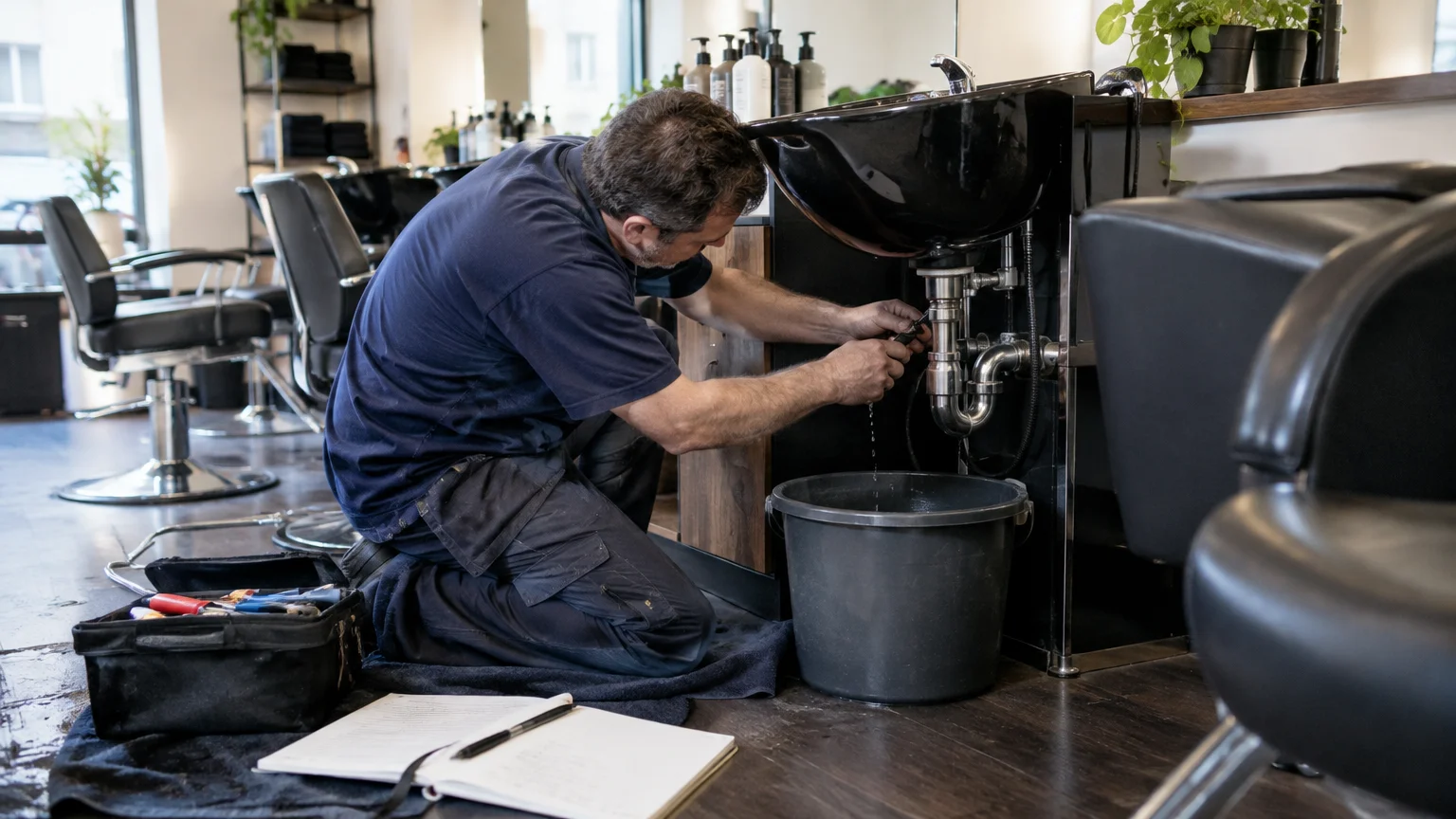
- What plumbing problems are common in hair salons?
- Why do shampoo station sinks drain slowly or clog?
- Why is a shampoo station leaking or losing water pressure?
- Why does a hair salon run out of hot water?
- How can salon owners prevent plumbing problems?
- When should a salon call a commercial plumber?
- How can a salon plan plumbing upgrades?
- Key takeaways
- Frequently Asked Questions
- Conclusion
What plumbing problems are common in hair salons?
Hair salons often deal with slow or blocked shampoo sink drains, dripping fixtures, weak water flow, and hot water trouble. Restroom toilets and faucets can also fail from frequent use. Finding the cause early can help keep stations open and reduce the chance of water damage.
How daily salon use strains plumbing fixtures
A shampoo station may serve many clients during a workday. Hair, conditioner, shampoo, and other products can go down its drain. Over time, this mix may stick inside the pipe and slow water flow. Spray hoses and faucet handles may also wear out from repeated use.
Hot water systems also face steady demand. If several stations run close together, the heater may struggle to keep up. Staff may notice cooler water, changing temperatures, or long waits between clients. These signs can point to a repair need, a change in water use, or equipment that does not fit the salon.
Restroom plumbing matters, too. A toilet that keeps running wastes water and may have a worn part inside its tank. A dripping faucet or backed-up drain can disrupt staff and clients. Staff can look inside the toilet tank for a part that is stuck or out of place, if they know how to do so safely. If the issue returns or a part needs replacing, arrange a repair.
Which issues need immediate attention?
A steady leak, water near electrical equipment, a strong gas smell, or a drain backup needs quick attention. Shut off the fixture or nearby water valve if it is safe. Keep people away from wet areas, and do not touch electrical items that may have gotten wet.
If you suspect a gas leak, leave the building. Contact the gas utility or emergency services from a safe place. Never try to find a gas leak with a flame. Highland Village Plumbing can help salon owners understand plumbing concerns and decide when a repair is needed.
Why do shampoo station sinks drain slowly or clog?
Shampoo station sinks often drain slowly when hair and product buildup collects in the trap or drain line. A trap is the curved pipe under a sink that holds water and helps block sewer gas. A blockage farther down the pipe may need a plumber’s tools to clear safely.
How hair, product residue, and debris affect drains
Loose hair can tangle and catch inside a drain. Conditioner, hair masks, and styling products may leave a sticky film. More material can stick to it over time, leaving less room for water to flow. The sink may gurgle, drain slowly, or hold standing water.
A small strainer can catch loose hair before it enters the pipe. Staff should empty it into the trash after each use. Hair should not be pushed down the drain, and strong chemical cleaners should not be a routine fix. Some cleaners can harm pipes, splash back, or create unsafe fumes, especially if mixed with another product.
What salon staff can safely check before calling a plumber
Staff can remove visible hair from the strainer and clean the basin as the maker directs. They can also see whether a nearby sink drains normally. If only one station is slow, the blockage may be close to that fixture. If several sinks or floor drains back up, the issue may be in a shared drain line.
Stop using a sink if water rises, sewage appears, or the clog soon returns after cleaning. Do not take apart plumbing parts unless trained to do so. A plumber can check the trap and pipe, clear a deeper blockage, and look for damage that simple cleaning will not fix. Tell the plumber when the problem began and which fixtures are affected.
Why is a shampoo station leaking or losing water pressure?
A shampoo station may leak or lose water pressure because of a worn hose, blocked spray head, loose connection, or faulty valve. A leak behind a wall or under the floor needs a professional check. Finding the source matters because hidden water can damage a building before anyone sees a clear sign.
Common causes in hoses, spray heads, valves, and connections
A split spray hose may leak only while the station is in use. A loose fitting can drip under the basin, while buildup or debris may block a spray head and weaken water flow. A valve that does not open all the way may also limit flow to one station.
Staff can look for visible drips and see whether the hose is bent or pulled tight. If the spray head comes off, follow the maker’s cleaning instructions. Do not force a stuck part or tighten a fitting that staff cannot reach safely. Stop using the station if water sprays toward electrical equipment or runs into a wall or cabinet.
Low water pressure can have several causes in a building. Check whether low flow affects one fixture or the whole salon. If other sinks work normally, the issue may be at the station. If several fixtures have weak flow, a shutoff valve, supply pipe, or wider plumbing problem may be involved.
When a leak may indicate a hidden pipe problem
Water stains, a musty smell, bubbling paint, or damp flooring can point to a hidden leak. A leak that returns after a visible fitting is tightened may also have another source. Staff should note where the signs appear and limit water use nearby.
Do not open a wall or floor to search for a pipe. A plumber can use leak detection tools and check connections that are easy to reach. If water is spreading, use a safe shutoff valve and arrange prompt help. Highland Village Plumbing can help salon owners decide if a visible drip needs a closer plumbing check.
Why does a hair salon run out of hot water?
A salon may run out of hot water when client demand is greater than the heater can handle, or when the unit has a fault. A worn part, buildup inside a tank, or a system that is too small can cause changing temperatures. A plumber can find the cause and explain whether repair or replacement may fit the salon’s needs.
How salon demand affects commercial water heater performance
A salon’s hot water use can rise and fall through the day. Several shampoo stations may use hot water close together, leaving less for the next client. The pipe layout and heater condition also affect how quickly hot water reaches each station.
Staff can note when the problem happens, which stations are affected, and whether water turns cold fast or warms slowly. Check that heater controls have not been changed by someone who is not allowed to adjust them. Do not remove covers or change gas, electrical, or temperature settings without proper training.
Tank heaters store hot water in a tank. Tankless heaters warm water as it flows through the unit. Each type has limits, and a tankless unit still needs enough capacity for the salon’s busiest times. A plumber can check the heater, fuel or power supply, venting, and expected use before suggesting a fix.
Signs the unit needs repair or replacement
A unit may need repair if hot water stops, the temperature changes without warning, or a control or part fails. A tank heater that leaks from the bottom may have a serious tank problem. Water could also come from a nearby pipe or valve. Keep away from pooled water and ask a plumber to find the source.
Repeated problems, visible rust, odd sounds, or water around the unit need attention. A plumber can explain whether repair is practical or replacement is a better long-term choice. Water Heater Repair can address faults, while Water Heater Installation may be needed for a new system. The right choice depends on the unit’s condition and the salon’s needs.
How can salon owners prevent plumbing problems?
Salon owners can prevent many plumbing problems with simple daily habits and planned checks. Keep hair out of drains, clean station parts as the maker directs, and watch for small leaks. These steps do not replace professional service, but they can help staff spot trouble before a station must close.
Daily habits for protecting sinks and drains
Set a clear routine for staff who use shampoo stations. A small drain strainer and regular cleaning can reduce hair entering the pipe. Staff should put hair and solid waste in the trash, not the sink. Do not pour products, oils, or cleaning chemicals down a drain unless the label says they are safe for that use.
A useful daily checklist includes:
- Clear loose hair from each strainer and put it in the trash.
- Wipe the basin and check the spray hose for drips or cracks.
- Run water briefly and note slow flow or unusual gurgling.
- Tell a manager about stains, damp cabinets, or water on the floor.
These checks are safe for staff because they do not involve opening pipes or heater covers. A staff member should stop using a fixture if a leak grows or a drain backs up. Record which station is affected and when the change began. Clear notes can help a plumber find the problem sooner.
Maintenance checks for water heaters and restroom fixtures
A manager can check open areas near the heater for dampness, rust, or unusual changes. Keep the space around the unit clear, but do not open its cover or adjust fuel or power parts. Follow the maker’s care instructions and arrange professional checks when the system shows signs of trouble.
Check restroom toilets, faucets, and floor drains as part of routine building care. A toilet that keeps running may have a faulty flapper, float, or fill valve. Staff can report the sound and location, but repeat or hard-to-reach problems need repair. Good records help track repeat issues and plan maintenance with a local plumber.
When should a salon call a commercial plumber?
A salon should call a commercial plumber when a leak, backup, weak flow, or hot water failure affects safety or daily work. Repeat clogs and problems across several fixtures also need a professional check. Early help can limit damage and help the business decide whether a station can stay in use.
Problems that can disrupt appointments or close a station
A blocked shampoo sink can stop service at that station. A leak under the basin may make the area unsafe, while no hot water can affect several appointments. A backed-up restroom or floor drain may mean the area must close until the problem is checked and cleaned safely.
Call promptly if water is spreading, a pipe has burst, sewage comes up through a drain, or a heater is leaking. If water is near electrical equipment, keep people away and do not touch it. If there is a gas smell, leave the building and contact the gas utility or emergency services from a safe place.
Emergency Plumbing can help with urgent plumbing failures. A plumber can inspect the fixture, find the cause, and explain safe next steps. If the heater is the problem, Water Heater Repair may address the unit. The right plumbing repair depends on what failed, so a clear description of the signs can help.
What information to share when arranging service
A salon manager can help the plumber prepare by describing the issue in plain words. Share which fixture is affected, when it began, and whether it is getting worse. Note if other sinks, toilets, or stations are affected, and whether the same problem happened before.
Mention signs such as a wet wall, water near the heater, a drain smell, or a change in water temperature. Share the heater’s make and model if it is easy to find without opening a panel. Keep staff and clients away from unsafe areas, and tell the plumber if anyone has used a shutoff valve.
How can a salon plan plumbing upgrades?
A salon can plan plumbing upgrades by matching fixtures and hot water capacity to its layout, staff, and client demand. A plumber can review how many stations run at once and where hot water is needed. Planning ahead helps the business choose equipment and set work times with less disruption.
Choosing fixtures and water heating capacity for business needs
Start by listing the shampoo stations, restrooms, and other fixtures. Note busy times and whether several stations need hot water together. A plumber can use this information to check the current heater, pipe size, venting, and best place for new equipment.
A tank system may suit a salon with steady demand and room for storage. A tankless system may be worth considering when space is limited, but it must be sized for busy periods. Neither type suits every building. Installation rules and venting needs can also affect the choice.
Choose fixtures made for frequent use and easy cleaning. Ask whether parts can be replaced and how the fixture connects to existing pipes. Water Heater Installation can help with selecting and fitting a new system. Anode Rod Replacement Water Heater may also help some tank units as part of care, depending on maker guidance and the unit’s condition.
Coordinating work to limit disruption
Plan work around the salon’s schedule and tell staff which stations may be out of use. Ask what areas must be clear and whether the water will need to be shut off. A simple work plan can help staff move bookings or use other stations during repairs or upgrades.
Before work starts, confirm which fixtures or systems are included and who will prepare the work area. After the job, ask the plumber to explain the new equipment and care steps. Keep the user guide and service notes where the manager can find them. A clear plan can help the salon return to normal work with fewer surprises.
Key takeaways
- Hair, product residue, leaks, and heavy use can strain salon plumbing.
- Staff can clean strainers and report signs, but should not open pipes or heater covers.
- Call a plumber for repeat clogs, spreading leaks, weak flow across fixtures, or hot water failure.
- Match water heating equipment to the salon layout and its busiest periods.
Frequently Asked Questions
What should salon staff do when a shampoo sink will not drain?
Staff should stop using the sink, remove visible hair from the strainer, and see if nearby fixtures drain normally. Do not pour harsh cleaners into the pipe or push debris farther down. If water stands, backs up, or the clog returns, arrange a plumber’s inspection.
What causes low water pressure at a salon shampoo station?
A blocked spray head, bent hose, partly closed valve, or worn connection may reduce flow at one station. If several fixtures have weak flow, the cause may be farther along the building’s supply system. Note which fixtures are affected and ask a plumber to check repeat problems.
What should a salon do if a water heater is leaking from the bottom?
Keep people away from pooled water and do not touch wet electrical parts or open the heater. If it is safe, use the correct water shutoff. Water may come from the tank or a nearby connection, so a plumber should find the source and advise whether repair or replacement is needed.
How can staff check for a gas leak near a water heater?
Staff should not test a suspected gas leak themselves. If anyone smells gas, leave the building and contact the gas utility or emergency services from a safe place. Do not use a flame, operate switches, or return until responders say it is safe.
When does a salon need water heater replacement instead of repair?
Replacement may be a better choice when the unit fails often, its tank leaks, or it cannot meet the salon’s hot water needs. A plumber should check the system and compare its condition with the business’s demand. Repair may still work if the fault is limited and the unit remains suitable.
Conclusion
Hair salon plumbing problems can affect client service, staff safety, and daily work. Regular drain care and quick reporting can help, but leaks, repeat clogs, and hot water failures need a professional check. These steps can help salons in Highland Village spot trouble and plan a safe next step. Highland Village Plumbing helps salon owners understand plumbing issues and plan a safe next step. Contact us to discuss a plumbing concern.
Learn more about the work of Highland Village Plumbing and use the staff checks in this guide to spot plumbing trouble early.
If you are not sure what you are dealing with, it is worth having someone look at it before it turns into a bigger job. Get in touch with Highland Village Plumbing today and we will tell you where you stand.