Grease trap cleaning removes fats, oils, grease, food waste, and sludge before they block commercial drains. Regular service helps restaurants protect kitchen plumbing, reduce odors, prevent backups, and keep wastewater moving. The right schedule depends on trap size, kitchen use, menu type, local rules, and the amount of grease produced.
Restaurant plumbing problems can disrupt meals, staff, customers, and daily income. A small drain issue can become a foul odor, slow sink, or wastewater backup. Good grease control helps stop these problems before they reach the main sewer line.
Highland Village Plumbing helps commercial property owners understand their drainage needs and choose suitable plumbing support. This guide explains how grease traps work, what causes trouble, and when a licensed plumber should inspect the system.
Table of Contents
- What is grease trap cleaning, and why does it matter?
- How does a grease trap work in a restaurant?
- How often should a restaurant grease trap be cleaned?
- What are the warning signs that a grease trap needs service?
- What causes grease traps and commercial drains to clog?
- What does professional grease trap cleaning involve?
- How should restaurant owners plan grease trap service?
- How can restaurant owners prevent grease-related plumbing problems?
- When should a restaurant call a commercial plumber?
- Key takeaways for managing grease traps and commercial drains
- Frequently Asked Questions
What is grease trap cleaning, and why does it matter?
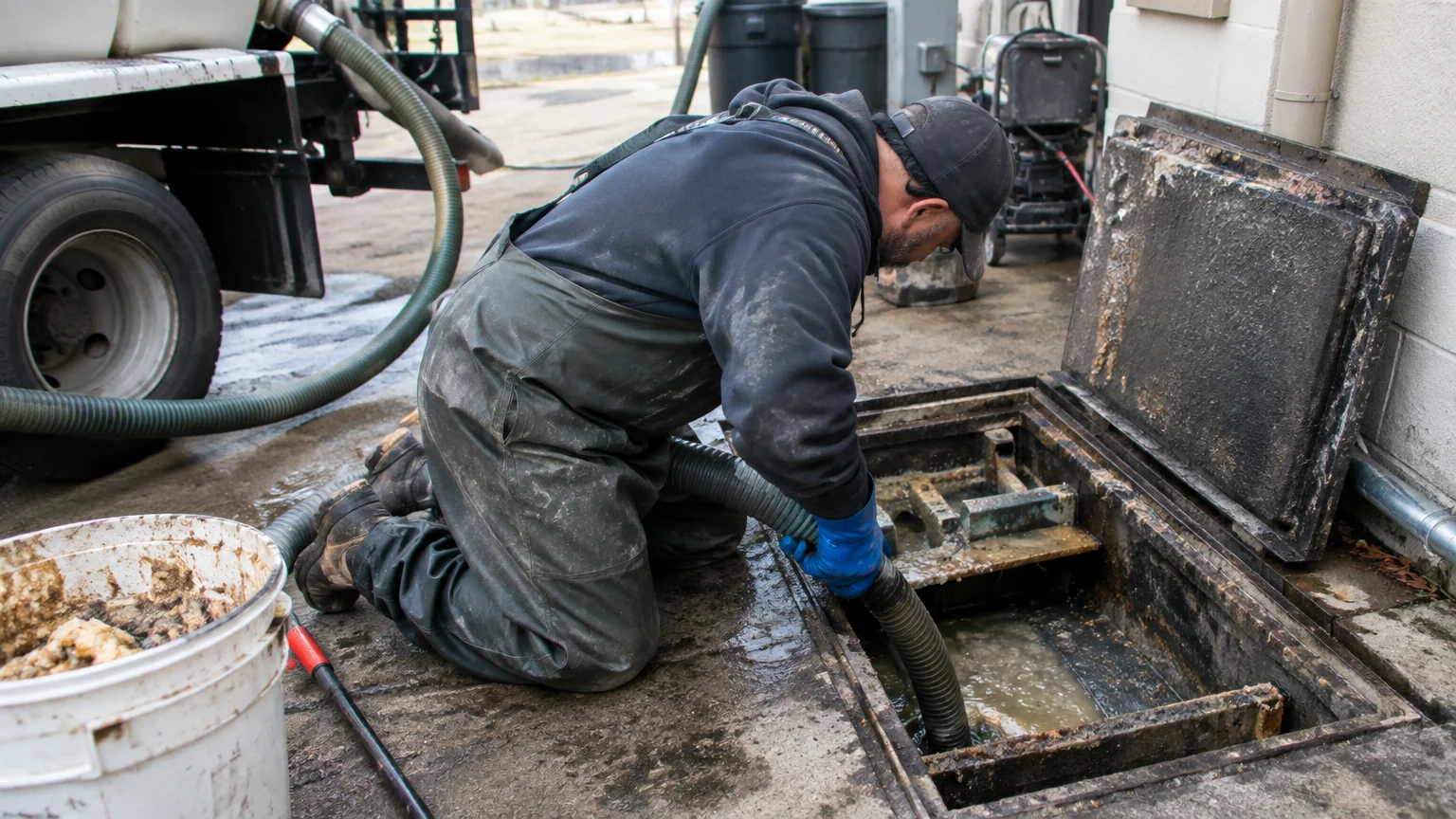
Grease trap cleaning is the removal of grease, solids, and wastewater waste from a plumbing trap or interceptor. A grease trap is a device that slows kitchen wastewater and separates grease before it enters the drain system. Cleaning removes the collected waste so the trap can keep working.
How grease traps protect commercial plumbing systems
Commercial kitchens send large amounts of water and food waste into drains. Fats, oils, and grease can cool inside pipes. They may stick to pipe walls and collect food scraps. Over time, this layer narrows the pipe and slows water flow.
A working trap catches much of this material near the kitchen. This helps protect branch drains, sewer lines, and pumping equipment. It also gives kitchen staff a clear place to control grease waste.
What happens when fats, oils, and grease are not removed
A full trap may stop separating grease well. Grease can then move into connected plumbing. This may cause odors, slow sinks, floor drain backups, or sewage-like water in work areas.
Blocked drains can create health and safety concerns. Wet floors may become slippery. Bad smells may affect staff and customers. Early grease trap cleaning is safer than waiting for a serious blockage.
How does a grease trap work in a restaurant?
A grease trap works by slowing wastewater so grease and solids can separate from water. Grease floats, heavy solids settle, and clearer water leaves through the outlet. The trap needs enough space and good flow control to work well.
The role of separation, retention, and wastewater flow
Kitchen water enters the trap through an inlet. Baffles reduce the speed of the flow. Grease rises toward the top, while heavy food particles settle at the bottom. The middle layer then moves toward the outlet.
This process is not a complete treatment system. The trap cannot handle unlimited grease or food solids. If it is too full, separation becomes poor. Strong water flow can also carry grease through before it settles.
Staff should keep large food scraps, oil, and grease out of sinks. Scraping plates first helps the trap last longer between services. Strainers can catch solids before they enter the plumbing.
Interior traps versus exterior grease interceptors
An interior trap is often installed near sinks or under kitchen fixtures. It is smaller and may fill faster. An exterior grease interceptor is larger and sits outside the building or underground. It may serve more fixtures and a larger kitchen system.
The cleaning method depends on the unit design. Access covers, baffles, inlet pipes, and outlet pipes must be checked. A commercial plumber can identify the equipment and inspect connected drains.
How often should a restaurant grease trap be cleaned?
A restaurant should clean its grease trap before grease and solids take too much working space. There is no single schedule for every kitchen. The right interval depends on trap size, wastewater flow, menu, staff habits, and local rules.
Factors that determine a safe cleaning schedule
A small trap below a busy sink may fill quickly. A large outdoor interceptor may hold more waste but still needs regular checks. A kitchen that serves fried food often sends more grease into its system than a kitchen with a lighter menu.
Warning signs should not be ignored because the next planned service is later. Odors, slow drainage, and rising water can show that the trap needs attention now. Records help owners see how fast the trap fills.
Restaurant owners should also review local rules and property requirements. Local authorities, landlords, or wastewater providers may set specific expectations. A licensed commercial plumber can help build a useful maintenance plan.
Why kitchen volume and menu type affect service frequency
A high-volume kitchen may use several sinks, dishwashers, and cooking stations. Each fixture adds wastewater to the system. Food type matters too. Frying, meat preparation, and heavy sauce use can produce more grease and solids.
Seasonal changes may affect the system. Busy events can increase kitchen use. A menu or equipment change may alter the waste entering the trap. The schedule should change when the kitchen changes.
What are the warning signs that a grease trap needs service?
The main warning signs include strong odors, slow drains, recurring backups, visible grease, and rising wastewater. These problems may mean the trap is full, damaged, or unable to handle the current flow. Prompt inspection can stop a small problem from reaching the sewer line.
Odors, slow drains, and wastewater backups
A sour or rancid smell near a trap can point to old grease and food waste. Odors may also come from a blocked vent or drain line. Do not cover the smell with chemicals or air fresheners. The source needs inspection.
Slow sinks and floor drains are another warning. If several fixtures drain slowly at once, the issue may be farther down the system. Wastewater backing up near a dishwasher or prep sink needs quick attention.
A toilet that keeps running is a separate plumbing issue, but it can raise water use and strain a commercial property. Staff should report all plumbing changes, even when they seem unrelated to grease.
Visible buildup, overflow, and changes in trap performance
Grease on the trap lid, around access points, or near drains suggests poor containment. Water around the unit may mean an overflow, loose cover, blocked outlet, or damaged seal. Do not open a full trap without proper equipment.
Cleaning drain vinegar baking soda methods may help with light household odors. They are not a substitute for commercial grease control. Vinegar and baking soda cannot remove a full trap or deep grease blockage. Harsh drain chemicals may harm plumbing parts or create safety risks.
What causes grease traps and commercial drains to clog?
Commercial drains clog when grease, food solids, soap, and other waste collect faster than the system can remove them. Poor kitchen habits are common causes. Damaged pipes, weak flow, and poor trap design can also play a part.
Improper disposal practices in restaurant kitchens
Pouring cooking oil into a sink is a common cause of grease trouble. Oil may look liquid when hot, but it can cool inside a pipe. Greasy pans, sauces, and food scraps add more material.
Kitchen teams should scrape plates into waste containers. They should collect used cooking oil in approved containers. Sink strainers can catch solids. Staff should know that hot water only moves grease for a short time. It does not remove grease from the plumbing.
How food solids, detergents, and damaged plumbing contribute to blockages
Food solids can settle inside a trap or drain. Detergents may break grease into smaller pieces, allowing it to travel farther into the system. This moves the problem instead of fixing it.
Crushed, offset, or sagging drain pipes may hold waste and slow flow. Tree roots can affect buried sewer lines outside the building. A blocked vent may also cause poor drainage and odors. Drain Cleaning Services can help locate the source when trap cleaning alone does not solve the issue.
What does professional grease trap cleaning involve?
Professional grease trap cleaning usually includes inspection, removal of liquid and solid waste, scraping, washing, and a check of connected plumbing. The exact work depends on the trap type, access, condition, and amount of buildup.
Inspection, pumping, scraping, and waste removal
The technician first identifies the trap and checks its access points. The trap may then be pumped or emptied with suitable equipment. Hardened grease and settled solids may need removal from inside surfaces.
The baffles, lid, inlet, outlet, and seals should be checked. A damaged baffle can affect separation. A blocked outlet can cause backups. The technician may note repairs or closer monitoring that are needed.
Waste must be handled under applicable local rules. Restaurant owners should keep service records. These records show when cleaning occurred and whether the trap fills faster than expected.
Why drain lines and connected plumbing may also need attention
Cleaning the trap does not always clear grease farther down the line. If drains remain slow, the branch line or main building drain may need inspection. A plumber may use drain cleaning equipment to remove buildup and restore flow.
Repeated blockages may need a deeper review. A camera inspection can help find damaged pipe, root entry, poor slope, or a separated joint. Emergency Drain Cleaning may be needed when wastewater backs up into a kitchen or customer area.
How should restaurant owners plan grease trap service?
Restaurant owners should plan service around trap conditions, kitchen use, inspection findings, and local rules. The best plan prevents overflow without relying on emergency response. A written schedule should change when the menu, equipment, or business volume changes.
What should be recorded after each service?
Records should note the service date, trap location, visible buildup, waste level, drain condition, and recommended follow-up. Staff can also record odors, slow fixtures, and backups between visits. This information helps identify patterns.
Owners should keep access areas clear. A hidden or blocked cover can delay service and make inspection harder. Equipment changes should be shared with the plumbing contractor because a new dishwasher or fryer can change wastewater flow.
The final service plan should reflect the property, not a generic calendar. Highland Village Plumbing can help restaurant owners review symptoms, equipment, and drainage concerns before work begins.
Why service planning helps protect operations
Planned maintenance lowers the chance of a sudden kitchen shutdown. It also gives staff time to prepare safe access and protect food areas. A planned visit may find a damaged part before it causes a major backup.
Owners should not judge service only by whether water flows today. A trap may still be close to full when drains seem normal. Inspection and records give a clearer view of system condition.
How can restaurant owners prevent grease-related plumbing problems?
Restaurants can prevent many grease problems by keeping food solids and oil out of sinks, training staff, and checking drains often. Simple habits work best when every shift follows the same process.
Kitchen practices that reduce fats, oils, and grease entering drains
Useful practices include:
- Scrape plates and pans into waste containers before washing.
- Collect used cooking oil in approved containers.
- Use sink strainers to catch food solids.
- Wipe greasy cookware before washing it.
- Keep trap covers sealed and access areas clear.
- Report slow drains and odors as soon as they appear.
Hot water and soap should not be treated as a grease removal plan. They may carry grease into cooler pipes. Chemical drain products can also create risks for workers and damage some plumbing materials.
Maintenance records, staff training, and routine inspections
New staff should learn how the kitchen drainage system works. Training should explain what belongs in a sink and what belongs in a waste container. Supervisors can check these habits during busy shifts.
Routine inspections should include sinks, floor drains, dishwashing areas, the trap, and nearby pipework. A property owner should also inspect for leaks, corrosion, odors, and standing water. Good records make changes easier to spot.
The same care helps with related plumbing. A P-trap in plumbing is the curved section that holds water and blocks sewer gases from entering a room. P traps can collect debris when drains are poorly maintained, so they should be checked when fixtures drain slowly or smell bad.
When should a restaurant call a commercial plumber?
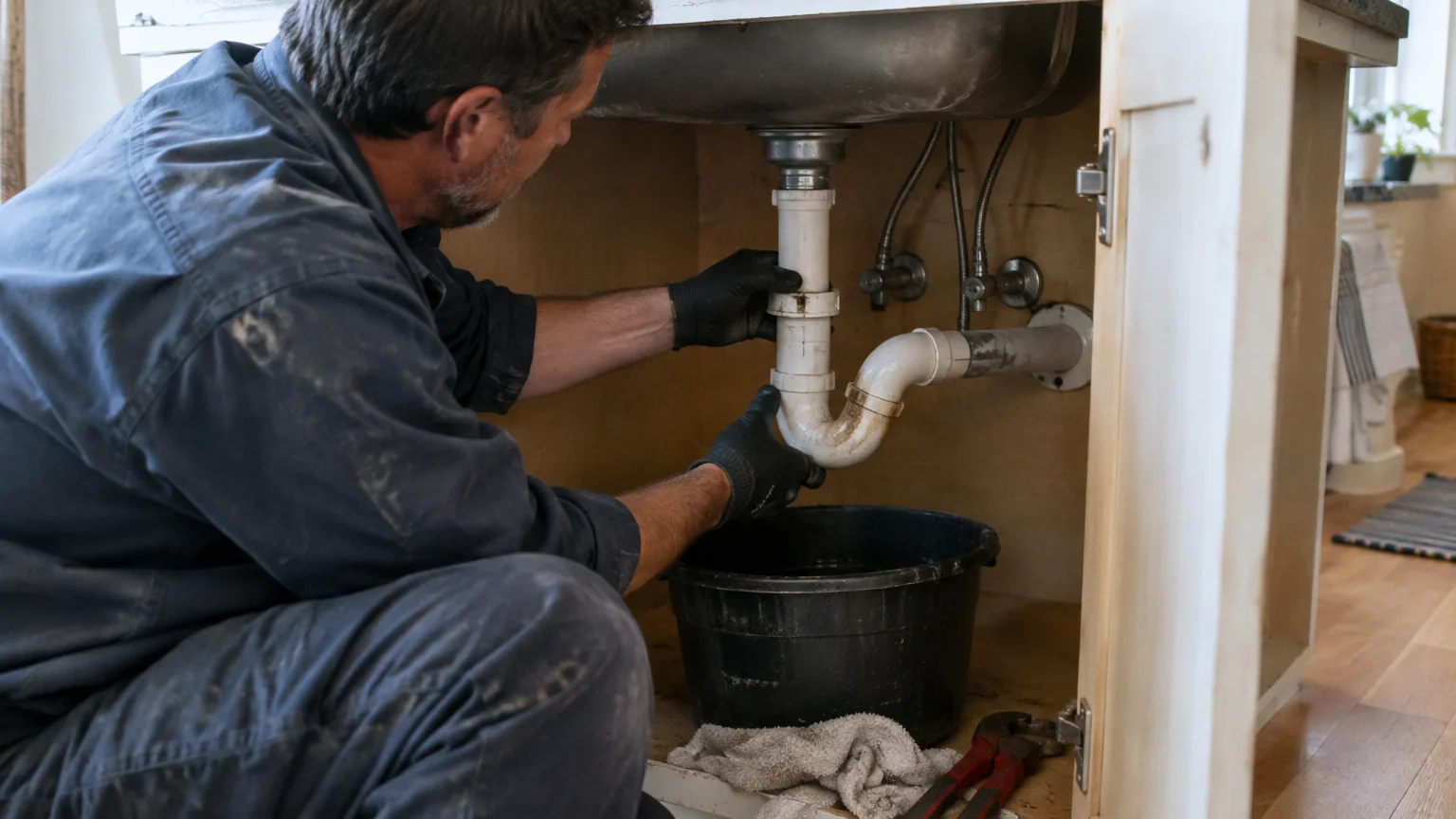
A restaurant should call a commercial plumber when drains back up, several fixtures slow down, odors return after cleaning, or the trap overflows. Professional help is also needed when a trap is damaged, access is unsafe, or the cause of a blockage is unclear.
Situations that require prompt professional attention
Urgent signs include wastewater on a kitchen floor, sewage odors, repeated backups, a blocked main drain, or water near electrical equipment. Staff should stop using affected fixtures when continued use could spread dirty water.
Gas concerns need separate care. If staff suspect a gas leak, they should leave the area, avoid switches and flames, and follow local emergency guidance. A plumber can handle gas line plumbing, but workers should not test a suspected leak with a flame or attempt an unsafe repair.
A toilet that keeps running may need a worn flapper, fill valve, float, or another part. The issue is not usually caused by a grease trap, but it still needs repair when simple adjustment does not help.
How licensed plumbing support helps protect operations and property
A qualified commercial plumber can assess the whole drainage path. This may include the trap, branch drains, vents, sewer connection, and fixtures. The goal is to find the cause, not only clear the nearest blockage.
Professional support is useful for leased spaces, older buildings, food service sites, and properties with repeated problems. It can help owners protect kitchens, reduce disruption, and plan repairs around business needs.
Key takeaways for managing grease traps and commercial drains
- Grease trap cleaning removes grease, solids, and sludge before they enter commercial drain lines.
- The correct service schedule depends on trap size, kitchen use, menu type, and local requirements.
- Odors, slow drains, visible buildup, and backups need prompt attention.
- Staff should scrape food, collect oil, use strainers, and avoid pouring grease into sinks.
- Repeated clogs may involve drain lines, vents, damaged pipes, or sewer connections.
A practical grease trap maintenance checklist
Restaurant owners can review the trap after service, confirm that access is clear, check nearby drains, and record signs of buildup. Staff should report odors, slow flow, overflow, or unusual sounds. The checklist should include training for new workers and a review after menu changes.
The property owner should keep service records and ask whether connected drains need inspection. If a trap fills much faster than expected, the cause may be disposal habits, equipment changes, or a plumbing defect.
Questions to ask before scheduling professional service
Owners should ask what type of trap the property has, whether connected drains will be checked, how waste will be handled, and what warning signs require faster service. They should also confirm that the work suits a commercial kitchen and its access limits.
For restaurants in the main Highland Village area, including Highland Shores, Castlewood, Lewisville, Flower Mound, Double Oak, Copper Canyon, and nearby communities, clear planning can help protect kitchen operations. Highland Village Plumbing serves commercial property owners who need practical guidance for grease traps, blocked drains, and related plumbing problems.
Frequently Asked Questions
Can baking soda and vinegar clean a restaurant grease trap?
No. Baking soda and vinegar may help with a light household odor, but they cannot remove a full commercial grease trap. They also cannot clear heavy grease from a long drain line. Restaurant owners should use proper waste controls and arrange professional service when the trap is full, blocked, or overflowing.
How often should a commercial kitchen inspect its grease trap?
The trap should be checked often enough to spot rising grease, food solids, odors, and slow flow before an overflow occurs. The service schedule depends on trap size, menu, kitchen volume, and local rules. Written records help owners adjust the plan when conditions change.
What should restaurant staff do during a grease trap backup?
Staff should stop using affected sinks and equipment, keep people away from dirty water, and protect food and electrical areas. They should not pour chemicals into the drain. A commercial plumber should inspect the trap and connected lines to find and remove the blockage safely.
Can a grease trap cause bad smells in a restaurant?
Yes. Old grease, food solids, poor seals, blocked vents, or a full trap can cause strong odors. Cleaning may solve the problem when buildup is the cause. If the smell returns soon after service, the connected drain, vent, or trap condition may need further inspection.
Does grease trap cleaning also clear the main sewer line?
Not always. Cleaning removes waste from the trap, but grease may also be present in branch drains or the main building sewer. If fixtures remain slow or backups return, the plumbing system may need drain cleaning, camera inspection, or sewer line repair.
Conclusion
Grease traps protect restaurant plumbing by separating grease and solids from wastewater. They need the right schedule, good kitchen habits, clear records, and prompt attention when warning signs appear. Cleaning the trap alone may not solve a deeper drain or sewer problem.
Restaurant owners in Highland Village can use regular inspections to protect staff areas, customer spaces, and daily operations. Contact us to discuss grease trap cleaning and commercial drain support from Highland Village Plumbing.