A garbage disposal hums but wont spin when its motor has power but the grinding plate cannot move. A stuck object is a common cause, but an overload or worn motor can also stop it. Turn the switch off right away. Follow the maker’s safety steps before checking the unit beneath your sink.
Table of Contents
- Why does a garbage disposal hum but not spin?
- Is it safe to keep running a humming disposal?
- What should you check before trying to clear a jam?
- How can you safely free a jammed garbage disposal?
- How do you reset a garbage disposal that still will not spin?
- When should you call a plumber or electrician?
- How can you prevent a garbage disposal from humming and jamming?
Why does a garbage disposal hum but not spin?
A steady hum often means the motor has power, but the grinding plate cannot move. A jam is one common cause. An overload, worn parts, or a failed motor can also stop the unit. Switch it off as soon as you hear the hum.
What does the humming sound mean?
The motor makes the hum as it tries to run. If the grinding plate is stuck, the motor cannot turn it. Keeping it on can make the motor too hot. The sound alone cannot tell you which part has failed, so do not guess or take the unit apart.
A hard item in the chamber may cause a jam. Bones, fruit pits, and small utensils can stop the plate. Food buildup may also block it. If the disposal stopped after something went down the drain, a jam is a likely cause to check first.
What else can stop the disposal?
The reset button may trip when the disposal gets too hot. If so, the unit may not run even after a jam is cleared. Worn motor parts or damaged wires can also cause trouble. Repeated humming, a burning smell, or a breaker that trips again means it is time to get help.
The sink drain can clog even when the disposal motor works. In that case, the disposal may spin while water drains slowly. If water backs up, do not add more water or use harsh drain chemicals. Drain Cleaning may help when a clog remains past the disposal.
Highland Village Plumbing can help homeowners tell a jam from a failed unit. Tenants and property owners can also note what happened before asking for service. Keep track of odd smells, leaks, or breaker trips. Those details may help a plumber find the cause.
Is it safe to keep running a humming disposal?
No. Turn the switch off and do not keep trying to start the disposal. A stuck motor can heat up, and more attempts may harm the unit. Keep hands and tools out of the grinding chamber while power is connected.
Why should the switch be turned off?
A disposal is built to grind food, but it is not safe to test a jam by reaching inside. Someone could turn on the wall switch while your hand is in the chamber. A loose item could also move when power returns. Treat the unit as unsafe until it is off and power is cut as the maker directs.
A humming disposal can use power without moving. If the hum continues, switch it off instead of holding the switch down. Do not use the sink to test a stuck unit. If the motor smells hot or you see smoke, stay clear and get help.
What safety steps matter before a check?
Read the unit’s guide if you have it. Some disposals plug into an outlet beneath the sink. Others are wired in place. If you do not know how to cut power safely, do not touch the outlet or wires. Ask a qualified plumber or electrician to check the unit.
Keep water away from electrical parts. Do not pull a plug with wet hands or remove an electrical cover. Never put a hand inside the disposal, even when it seems off. Use a flashlight to look from above. Keep your face back from the drain opening.
Stop using the disposal if water leaks under the sink. Move stored items away if it is safe, and protect nearby belongings. A leak near a power connection needs prompt care. Highland Village Plumbing can advise property owners when a trained worker should check the unit.
What should you check before trying to clear a jam?
First, find the disposal model and read its instructions. Then make sure the switch is off and follow the maker’s steps to cut power. Do not start if you cannot tell that the unit is safe to check. A careful look may reveal a loose object without putting a hand near the grinding parts.
Where are the reset button and turning point?
Many units have a small reset button on the bottom. Its place and use depend on the model. Some also have a socket underneath for a special wrench or hex key. Check the guide or label to see which tool fits. Do not force a tool into a socket that does not match.
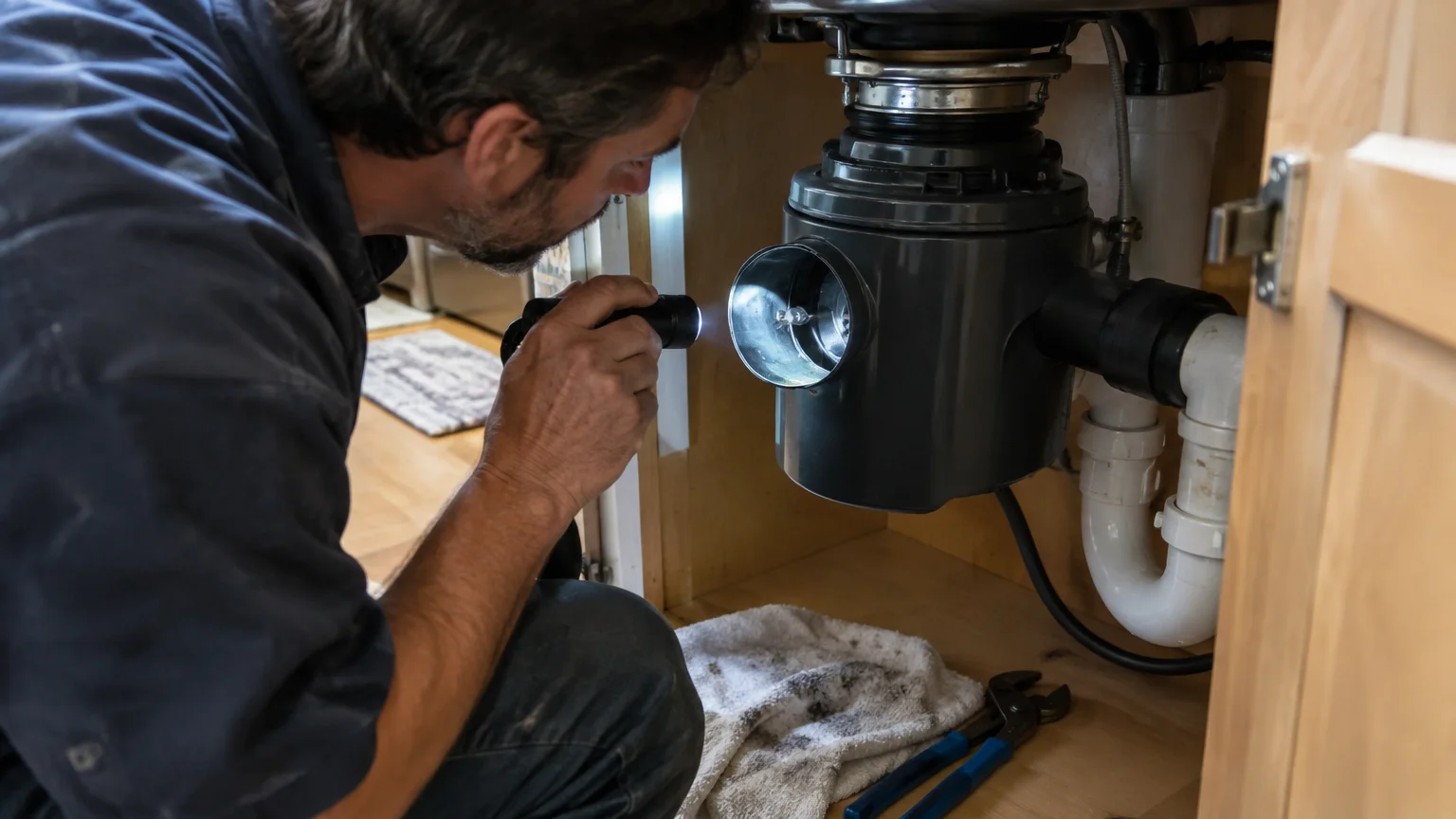
Clear items from the cabinet so you can see the bottom of the disposal. Use a flashlight to look for a reset button, a tool socket, or a leak. Keep the unit off while you check. Stop and call for help if you see damaged wires, water by the outlet, or a cracked unit.
What should stay out of the chamber?
Keep hands, fingers, spoons, and other tools out of the grinding chamber. Do not use a knife, screwdriver, or metal hook to reach a stuck item. These can slip, hurt you, or damage the unit. If you can see an item from above, leave it there until the unit is safely disconnected and the maker’s guide explains what to do.
A safe check means doing only what the instructions allow. Look for clear signs of damage, note the model, and check whether you can reach the power source safely. Do not take the disposal apart to search for a jam. Repairs inside the unit can expose sharp parts and electrical dangers.
Tell the plumber if you also have a sink leak or clogged drain. They may need to inspect the disposal and nearby Kitchen Plumbing. Share whether the unit hums, clicks, or stays quiet after you press the switch. Clear details can help guide the next safe step.
How can you safely free a jammed garbage disposal?
Try to free a jam only if the maker’s guide allows it and power is safely cut. Use the right disposal wrench or hex key if the unit has a matching socket. Never reach into the chamber. If the tool will not turn with light pressure, stop and arrange a professional check.
How do you use the maker’s wrench?
With power off, place the correct wrench into the socket under the disposal. Follow the maker’s steps to move the grinding plate back and forth. Use light, steady pressure. Do not force the wrench, add an extension, or use a different tool to make it turn.
If the plate moves, take out the wrench before restoring power. Look into the chamber with a flashlight, but keep your hands and tools out. Remove a visible item only in the way the instructions allow. If you cannot remove it safely, leave it for a plumber.
How do you check for an obstruction?
A flashlight may show a hard object near the top of the chamber. Do not put your fingers inside, even if the item looks easy to reach. Do not pour chemical drain cleaner into the disposal. Chemicals can splash or harm parts, and they will not free a stuck grinding plate.
After clearing a jam, follow the guide before restoring power. Run water only if the maker says to do so for a test. Stand clear of the drain and switch the unit on briefly. If it hums again, turn it off right away. Do not repeat the test several times.
Some jams return because the disposal is worn or an item is still trapped. A unit that will not turn with gentle wrench pressure also needs a closer look. Taking apart a garbage disposal is not a safe home repair. Leave repairs inside the unit to a qualified professional.
How do you reset a garbage disposal that still will not spin?
Use the reset only after clearing the jam and letting the unit cool as the maker directs. The reset button is an overload protector. It cuts power when the motor gets too hot. It does not clear a jam or fix a broken motor. Turn the unit off if it hums again.
When should you press the reset button?
Find the button by checking the guide or label on the disposal. Make sure the wall switch is off. Press the button only as the instructions say, and do not force it. Stop if it will not stay in or the breaker trips. The unit may still be jammed or have an electrical fault.
Do not press reset again and again to make the disposal run. Repeated trips point to a problem that needs care. A hot motor may need time to cool, but reset will not help if the grinding plate is still stuck. Follow the maker’s advice instead of guessing how long to wait.
How can you test it safely?
Once the instructions say it is safe, remove any wrench. Make sure the chamber looks clear, but do not reach inside. Restore power only if the plug, wires, and area are dry and undamaged. Run water if the guide calls for it, then briefly switch on the disposal from a safe spot.
A disposal that runs smoothly may be ready for normal use. Stop it if you hear a hum, grinding sound, or repeated clicks. Also stop if water leaks under the sink or the breaker trips. Do not keep restarting it to see if the problem goes away.
If the unit stays quiet after reset, that does not prove it is safe or fixed. A loose connection, failed switch, or damaged motor may also stop it. Do not open electrical parts yourself. A plumber or electrician can check the cause and say whether repair or replacement is safer.
When should you call a plumber or electrician?
Call a professional if the disposal still hums after safe checks, the jam will not move gently, or reset keeps tripping. Get help for leaks, burning smells, damaged wires, smoke, or a breaker that trips again. Do not open the unit or touch exposed electrical parts.
What signs point to a larger problem?
A failed motor may hum without turning or give off a hot, burning smell. A wiring issue may trip the breaker or make the unit act in an odd way. A leak from the disposal body may mean a seal or housing is damaged. These are not simple cleaning or reset jobs.
Jams that keep coming back may point to worn parts, a damaged plate, or items that should stay out. Stop the unit if it makes a loud metal sound. A plumber can check the disposal and nearby drain pipes. An electrician may be needed if the switch, outlet, or wires are the concern.
What might a professional inspect?
A professional may check the power source, switch, reset, motor, grinding parts, and drain connection. They can look for a jam without asking you to reach inside. If the unit is damaged or worn out, they can explain whether repair or sink disposal installation makes more sense.
The right fix depends on the unit, what caused the problem, and the state of nearby pipes. A new unit may be needed if the old one cannot be fixed safely. A plumber can also check for leaks that may harm the cabinet or sink. Share what you have tried, including whether the reset button stayed in.
Highland Village Plumbing can help Highland Village homeowners and rental property owners with disposal problems and related plumbing concerns. Tenants should tell the property owner about a leak or electrical concern right away. Do not use a unit that hums or smells hot while waiting for help.
How can you prevent a garbage disposal from humming and jamming?
Use the disposal only for food scraps its maker says are safe. Run it as directed, keep hard objects out, and stop if it makes a strange sound. Regular care can lower the chance of a jam, but it cannot stop every problem.
What should not go down the disposal?
Keep items out if the manual warns against them. Hard pits, bones, utensils, and other objects can stop the grinding plate. Fibrous scraps and large amounts of food may also cause trouble in some units. If you are unsure, put scraps in the trash or compost.
Feed suitable scraps in small amounts and follow the maker’s advice about water. Do not pour cooking grease into the sink, since it can harden in pipes. Avoid harsh chemicals unless a professional or the maker says they are safe for your system. A clog may need Drain Cleaning instead of more disposal use.
What routine care helps?
Keep the cabinet under the sink dry and clear enough to spot a leak. Watch for drips, odd sounds, slow drains, or a change in how the unit runs. Follow the care steps in the manual, since models can differ. Do not take the disposal apart for routine cleaning.
If the disposal jams often, note what went into it and when the trouble began. That may reveal a pattern, such as hard scraps or a clogged drain. Stop using the unit when it hums, leaks, or trips the breaker. Early care may help limit harm to the disposal and cabinet.
Key takeaways
- A hum often means the motor has power but cannot turn.
- Switch the disposal off promptly, and never put a hand inside.
- Use only the maker’s tool and steps to clear a jam.
- Reset the unit only after the jam is cleared and it is safe.
- Call a professional for repeat trouble, leaks, heat, or electrical signs.
A humming disposal may have a simple jam, but repeated starts can make things worse. Safe checks are limited to the steps allowed by the maker. If the unit stays stuck or shows signs of damage, stop and get qualified help. Contact us to have Highland Village Plumbing inspect a disposal that still hums, will not spin, or seems unsafe.
Frequently Asked Questions
Can a humming garbage disposal cause damage?
Yes. A motor that keeps trying to turn while the plate is stuck can get too hot or suffer damage. Switch the unit off as soon as it hums. Do not keep pressing the switch or resetting it. If the sound returns after a safe check, leave the disposal off and call a professional.
Can a homeowner repair a garbage disposal?
A homeowner can check the manual, switch the unit off, and use its maker-approved wrench if power is cut as directed. Never reach into the chamber or open electrical parts. Call a professional if the jam will not move gently, reset keeps tripping, or there is a leak.
How do you repair a garbage disposal that is jammed?
Start by turning it off and following the maker’s steps to cut power. If the unit has a matching wrench socket, use the right tool gently. Do not force it or reach inside. If the grinding plate stays stuck, stop and arrange a professional check instead of taking the unit apart.
Should a disposal be replaced if it keeps jamming?
Not always. A jam may come from an item that should not have gone into the unit. But repeated jams can point to worn or damaged parts. A professional can check the motor, grinding plate, and drain connection. Repair or replacement depends on the unit’s state and the cause.
Is sink disposal installation needed when a motor fails?
Not every time. Some units can be repaired, while a badly damaged or worn unit may need replacement. A plumber can check the disposal, its power connection, and the sink drain before advising on installation. Do not install or wire a replacement unless you can do so safely and correctly.
If you are unsure what is wrong, have the unit checked before the problem grows. Highland Village homeowners can use the safety steps above, but should leave electrical faults and stuck parts to a professional.
If you are not sure what you are dealing with, it is worth having someone look at it before it turns into a bigger job. Get in touch with Highland Village Plumbing today and we will tell you where you stand.