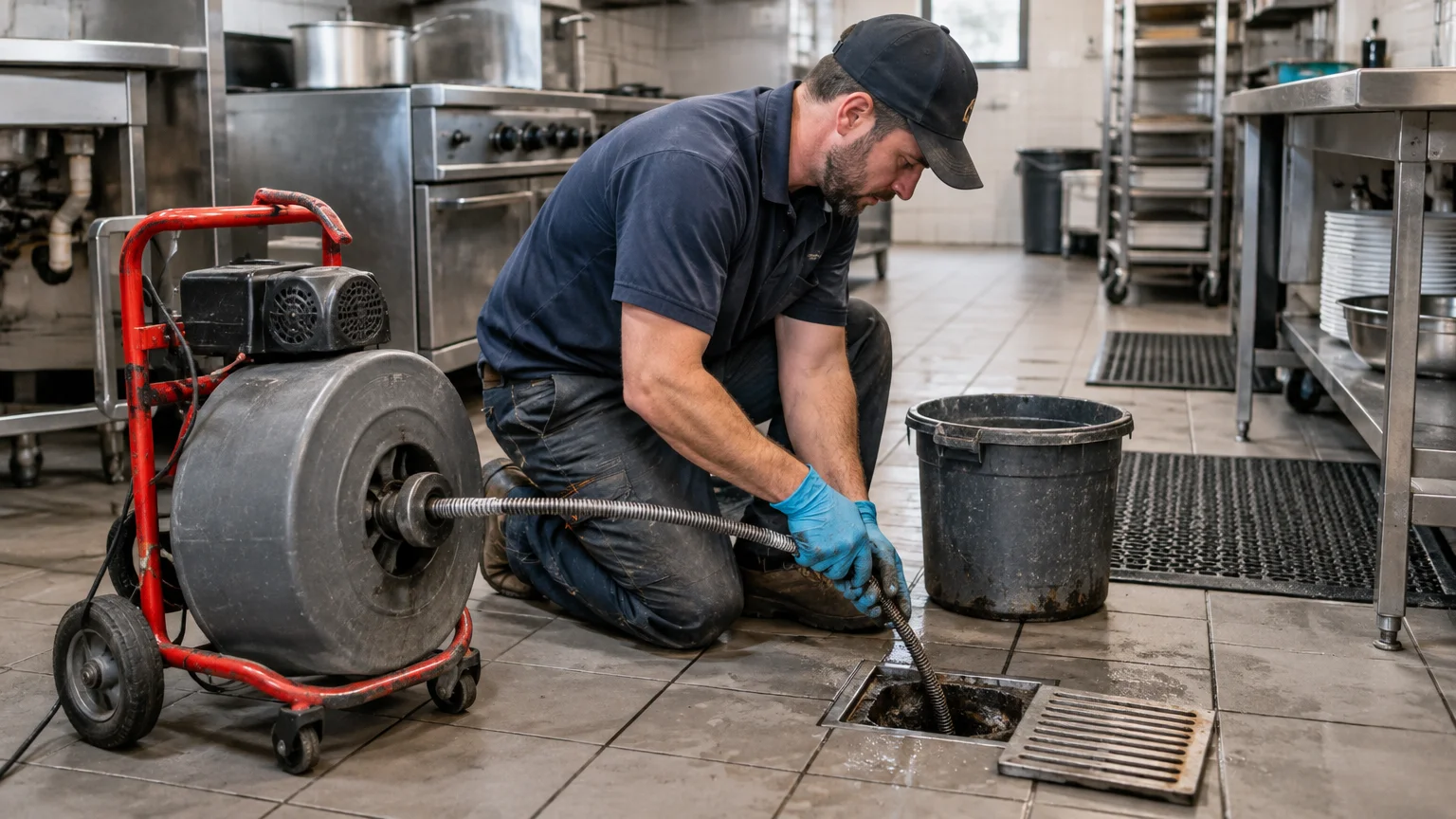
Commercial floor drain problems can be signs of a small clog or a larger plumbing issue. Slow flow, standing water, bad smells, and repeated clogs all deserve attention. In Highland Village, staff can clear visible debris and watch for changes, but several affected drains or wastewater backups need a licensed plumber’s help.
What are the common signs of commercial floor drain problems?
Slow drainage, standing water, repeat clogs, foul odors, and gurgling can all point to a drain problem. One sign may come from a clog close to the drain. Several signs at once may mean the trouble is in a shared drain or sewer pipe. Finding the issue early can help protect floors and work areas.
How do slow drainage, standing water, and recurring clogs differ?
A slow drain takes longer than usual to carry water away. Standing water means water drains very slowly or does not drain at all. A recurring clog is one that returns after someone has cleared the drain. This may mean buildup remains inside the pipe, or that another problem is present.
The location of the trouble can help show where to look. If one floor drain is slow, the clog may be near that drain. If several nearby drains slow down at the same time, they may share a pipe with a blockage. Staff can note which drains are affected and when the issue starts. These details can help a plumber find the cause.
What do odors, gurgling, and sewer backups indicate?
A bad smell may come from waste, grease, or water left in a drain. A drain trap is a curved part of the pipe that holds water. That water helps stop sewer gas from entering the building. If the trap dries out or stops working, smells may come through. Gurgling can mean air is trapped or water is not moving well.
A sewer backup is more serious. It happens when wastewater flows back through a drain instead of away from the building. Keep people away from dirty water, and do not wash it into another drain. Highland Village Plumbing can help businesses review repeated drain concerns and decide when plumbing service is needed.
What causes floor drains to clog or back up in commercial buildings?
Grease, food scraps, dirt, and other debris can collect inside commercial drain pipes. Heavy use can make buildup more likely, especially in kitchens, wash areas, and busy work spaces. A clog may also come from a damaged pipe, poor pipe slope, or a sewer line problem. The right fix depends on where the blockage formed and what caused it.
How do grease, food waste, and sediment affect commercial drains?
Grease can cool and stick to the inside of a pipe. Food scraps and sediment may then catch on it and make the opening smaller. Over time, water can drain slowly, while more waste builds up in the pipe. Floor drains should not be used to get rid of cooking oil or food scraps.
A drain snake is a tool that turns or moves through a pipe to break up or remove a clog. It may help with some blockages, but it does not stop grease from building up again. Baking soda and vinegar are common home cleaning tips, but they may not clear a deep or thick clog in a commercial drain. Drain cleaning enzymes are products made to help break down some organic waste. They do not fix damaged pipes or clear every kind of blockage. Staff should follow product labels and workplace safety rules.
Can sewer line damage, poor installation, or heavy use cause recurring problems?
Yes. A cracked, crushed, or shifted sewer pipe can slow water flow and lead to repeated backups. A pipe with poor slope may not carry water and waste away as it should. These issues can seem like a stubborn clog, but clearing the drain will not fix the main cause.
Heavy use can also put more strain on a drain system. A drain used often for cleaning, food waste, or wash water may need a care plan that fits its use. If several drains clog again soon after clearing, the cause may be farther down a shared pipe. A plumber can check for damage, buildup, and other common problems before suggesting a repair.
How are commercial floor drain problems diagnosed and repaired?
A plumber first checks which drains are affected and asks when the trouble began. The plumber may look at the drain opening, test how water flows, and check for signs of a wider backup. The repair depends on what the checks find. A small clog may need clearing, while repeat trouble may call for a camera check or sewer line repair.
When are drain cleaning and mechanical clearing appropriate?
Drain cleaning can remove grease, sediment, and other buildup from a pipe. Mechanical clearing uses tools like a drain snake to break up or pull out a blockage. These methods may work for a clog that is within reach and does not come from a broken pipe. The plumber picks a method based on the drain and the type of clog.
An enzyme product may help with some organic buildup, but it cannot clear every clog. Staff should not mix cleaning products or pour strong chemicals into a drain without checking the label and site rules. Mixing products can create unsafe fumes or harm plumbing. For one slow drain with no backup, staff can remove visible debris from the cover and keep the area clear. A professional is not needed for that simple task when site rules allow it.
When might a plumber use a camera inspection or repair a sewer line?
A camera inspection uses a small camera on a cable to look inside a pipe. A plumber may suggest one when clogs keep returning, several drains are affected, or the cause is not clear. The camera can help find buildup, cracks, root growth, or a pipe that has moved out of place.
If the pipe is damaged, clearing the clog may only help for a short time. The plumber can explain whether the pipe needs repair or replacement and which part of the system is affected. A sewer backup, wastewater near a work area, or repeat blockage needs prompt help. Highland Village Plumbing can explain drain cleaning and repair options for commercial properties.
How can businesses prevent recurring floor drain problems?
Businesses can help prevent repeat clogs by keeping grease, food waste, and loose debris out of floor drains. Regular checks can help staff spot slow flow, odors, or standing water before a backup starts. A care plan should match how the building is used and what enters its drains.
What maintenance practices help control grease and debris?
Staff can keep drain covers in place, remove visible debris, and clean around drains during routine upkeep. In food-service areas, grease and food scraps should go into approved disposal or collection systems, not floor drains. Staff should also note changes in drain flow instead of waiting for water to stop moving.
Useful steps include:
- Keep drain covers clear and in place.
- Keep cooking grease and food scraps out of floor drains.
- Record repeat clogs, slow flow, odors, or gurgling.
- Follow product labels and workplace safety rules for drain products.
- Arrange drain cleaning when buildup returns or water flow slows again.
These steps can help staff notice changes early, but they cannot fix a damaged pipe. Enzyme products may suit some care plans, but they should not replace a plumber’s check when a drain backs up or keeps clogging. Businesses should follow local rules for waste and grease handling.
When should a business call a licensed plumber?
A business should call a licensed plumber when a clog returns, several drains slow at once, wastewater backs up, or a bad smell continues after basic cleaning. A plumber can check whether the issue affects one drain or a shared pipe. Quick attention may help limit damage to floors, equipment, and nearby work areas.
Staff should keep people away from wastewater and follow the building’s safety plan while waiting for help. They should not try to open or repair a sewer line. A drain cover with visible debris is different: staff can clear it safely when site rules allow. For repeated commercial floor drain problems, a trained plumber can find the cause and explain the next step.
Key takeaways
- Slow flow, standing water, odors, and repeat clogs can point to drain trouble.
- Grease, food scraps, sediment, heavy use, and pipe damage are common causes.
- Staff can clear visible debris, but repeated clogs need a plumber’s attention.
- Camera checks can help find problems deeper inside a pipe.
- Keeping waste out of drains can help reduce buildup and backups.
Frequently Asked Questions
What causes a commercial floor drain to smell?
A floor drain may smell when waste or grease collects in the pipe, or when its water-filled trap is dry or not working well. A sewer smell that keeps coming back can point to a larger plumbing issue. Staff can clear visible debris, but should ask a plumber to check smells that continue.
Can a drain snake clear a commercial floor drain?
A drain snake can break up or remove some clogs in a commercial floor drain. It may not remove all grease buildup or fix a damaged pipe. If the drain clogs again soon after clearing, or several drains are affected, a plumber can check for a deeper cause.
Do baking soda and vinegar clear a blocked floor drain?
Baking soda and vinegar may not clear a deep, thick, or recurring blockage in a commercial drain. They do not repair a cracked pipe or remove every kind of buildup. Staff should follow site safety rules and product directions, and should not mix drain products. For repeat clogs, a plumber can look for the cause.
When is a floor drain backup an emergency?
A floor drain backup needs prompt attention when wastewater enters the building, spreads near people or equipment, or affects more than one drain. Keep people away from the water and follow the site safety plan. A licensed plumber can find the source and help limit further damage.
Conclusion
Commercial floor drain problems can begin with slow flow and lead to repeat clogs or a sewer backup. Staff can keep covers clear and stop grease and food scraps from entering drains. A plumber should check repeated trouble, several affected drains, and any wastewater backup. Contact us to discuss a drain concern at your commercial property. Highland Village Plumbing serves Highland Village and nearby areas.