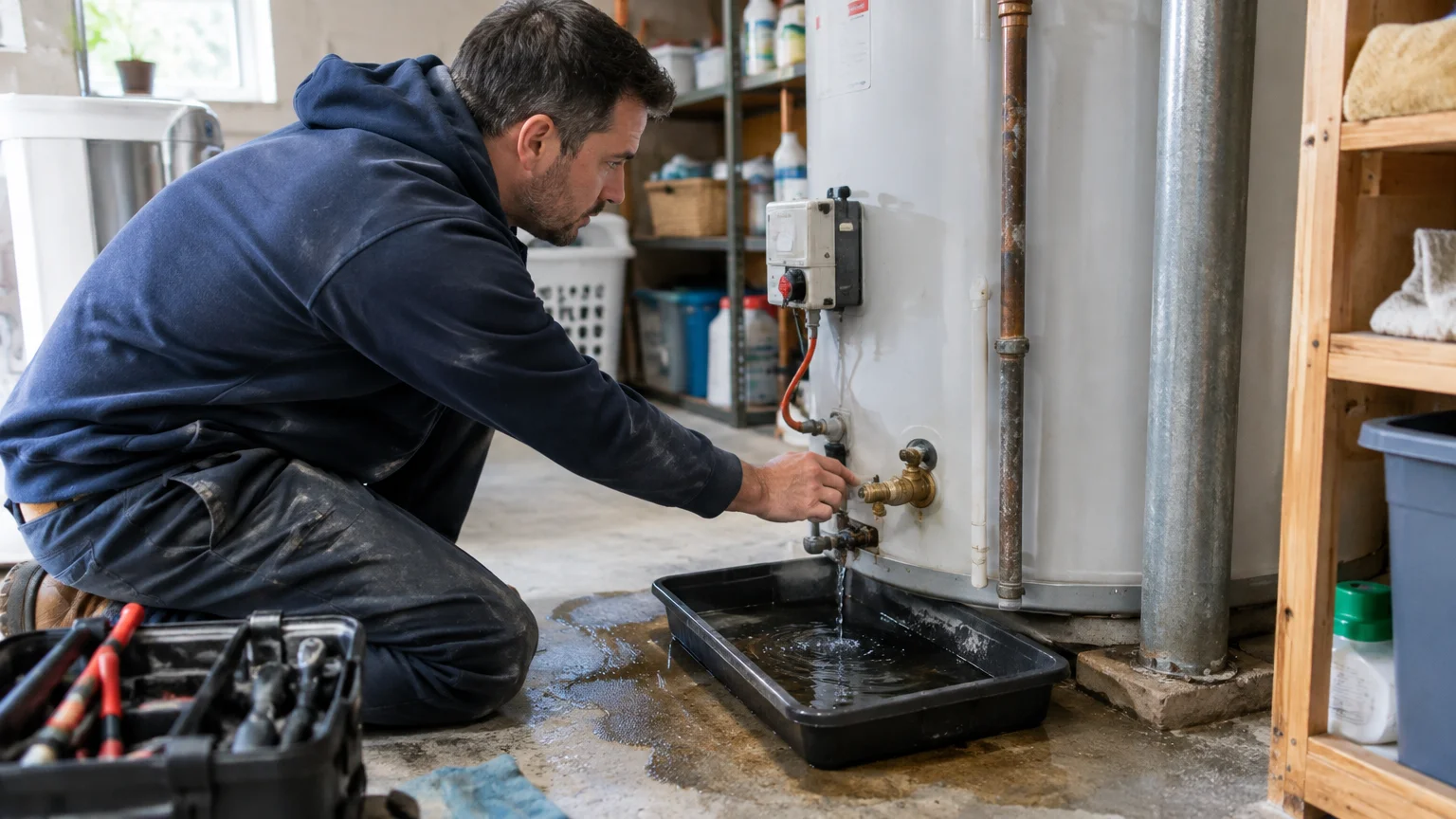
If you are asking water heater leaking what to do, start by keeping people away from water near electrical parts. Shut off the heater’s water supply only if the valve is safe to reach. Turn off power or gas only from a safe, dry place. Catch small drips, move belongings, and call a plumber if water keeps coming or the tank is wet.
What should you do first when your water heater is leaking?
First, protect people, stop the water if you can, and limit damage. Even a small puddle can spread when water continues to flow from a pipe or tank. Keep children and pets away from the area. Never step into standing water near an outlet, appliance, or electrical panel.
How to shut off the water and power safely
If the floor is dry and the valve is easy to reach, turn off the cold-water supply above the heater. The valve is often on the pipe that brings water into the tank. Turn it gently, and do not force it if it is stuck or damaged. If water still flows, use the home’s main water shutoff only when you know where it is and can reach it safely.
For an electric heater, switch off its circuit breaker only when the floor and panel area are dry. Do not touch the breaker or heater while standing in water. For a gas heater, follow the instructions on its label only if there is no sign of a gas leak. If you smell gas, leave the building without using switches or flames. From a safe place, contact emergency services or the gas utility.
How to limit water damage while you wait
Move belongings away from the leak if you can do so safely. Towels or a bucket may catch a small drip, but keep them away from hot water, wires, and gas parts. If water reaches a wall, ceiling, or outlet, stay clear and seek urgent help. Do not open the heater or try to find a leak by touching its parts.
Take photos from a safe spot to record where the water appeared and how far it spread. These may help show what happened when a plumber checks the area. Highland Village Plumbing can assess the leak and explain safe next steps. Leave the heater off until someone has checked what caused the problem.
Where do water heater leaks commonly come from?
Water may come from a pipe joint, valve, drain opening, or the tank itself. The wet spot can give you a clue, but it may not show where the leak began. Water can run along a pipe or down the outside of a tank before it reaches the floor. Leak detection means finding the true source, not just the place where water collects.
Leaks at connections, valves, and the tank
From a safe distance, look for water near the cold-water inlet, hot-water outlet, or nearby pipe joints. A worn or loose part may leak where a pipe joins the heater. The temperature and pressure relief valve is a safety part that lets water out when heat or pressure gets too high. If water keeps coming from its discharge pipe, ask a plumber to check it.
The drain valve near the bottom of a tank may also drip. Do not tighten, remove, or plug a valve yourself. It could be hot or damaged. Water coming through the tank or from beneath it may mean the inside is rusty or the tank has failed. A leaking tank often needs water heater replacement, but a plumber must confirm the cause first.
How to distinguish a leak from normal condensation
Condensation is moisture that forms when warm, damp air meets a cool surface. It may look like a light film across the tank or nearby pipes, especially when the air is humid. A puddle that keeps returning, a steady drip, rust marks, or wetness after drying is more likely to mean a leak.
Dry the floor only if it is safe, then watch from a distance for new water. Do not touch hot pipes or take off covers to investigate. If you cannot tell where the moisture comes from, ask a plumber to check the heater and its connections. Highland Village Plumbing serves Highland Village, where local property owners can get help telling a small connection issue from a problem that needs quick repair.
When should you call an emergency plumber for a leaking water heater?
Call an emergency plumber if water will not stop, the tank appears to leak, or people and property may be at risk. A leak with a sudden loss of hot water also needs prompt attention, especially if the heater shows other warning signs. Keep away from electrical hazards, and do not try to fix gas or pressure parts yourself.
Warning signs that need urgent professional attention
Get urgent help if water spreads, pours from a valve, or reaches walls, floors, or electrical areas. A bulging or badly rusted tank, loud popping, steam, or very hot water near the heater also needs a professional check. These signs may point to trouble with heat, pressure, or the tank. Do not touch the heater to test what is wrong.
A sudden loss of hot water and water around the heater may be signs of a larger failure. Do not keep using the unit just to see what happens. A licensed plumber can check the heater, shutoff parts, and nearby pipes. They can explain whether Water Heater Repair or other work may be needed.
Why a leaking tank or gas appliance needs expert assessment
A water heater uses water and heat, and some models also use gas or high-voltage power. Work on burners, wiring, pressure controls, or a rusty tank can cause burns, shock, fire, or more water damage. Leave those repairs to a trained professional. Homeowners can safely move items or catch a small drip only when the area is dry and clear of hazards.
If you smell gas, leave the building without looking for the source. Do not turn lights or appliances on or off, and do not use a phone inside. Once outside and safe, contact emergency services or the gas utility. If it is a water-only leak, shut off the supply if safe, then arrange help when you cannot contain the leak.
What happens after a plumber assesses the leak?
A plumber checks where the water comes from, the heater’s condition, and whether nearby pipes or valves are involved. They may ask when the leak started and whether hot water stopped, odd sounds began, or warning signs appeared. These details help guide the check. You do not need to take the heater apart or handle its parts.
How repair or replacement decisions are made
The next step depends on the leak’s source, the condition of the parts, and whether the tank is damaged. A pipe connection or valve may be repairable. If water leaks through the tank body, repair may not be safe or useful. The plumber can explain what they found and discuss repair or replacement choices before work starts.
A new unit needs to fit the home’s hot-water needs and meet local rules. Tankless water heater installation may suit some properties, but it does not automatically solve every leak. The right choice depends on the current setup, fuel, venting, and household needs. Water Heater Installation may be part of a planned replacement after the cause and options are clear.
Frequently Asked Questions
What should someone do if a water heater is leaking from the bottom?
Stay away from standing water and shut off the cold-water supply if its valve is safe to reach. Turn off power only from a dry, safe spot. Water at the bottom may come from a valve or the tank, so do not guess or open parts. Call a plumber if water keeps coming or the tank is wet.
Can a leaking water heater still be used?
It is safer to stop using a leaking heater until someone finds the source. Shut off the water supply if the valve is safe to reach. Turn off power or gas only when you can do so safely. Do not restart the heater to test it. A plumber can check if it is safe to use again.
Is a small drip from a water heater an emergency?
A small drip may come from a fitting, but it can get worse or point to a failing part. Catch water only when the area is safe, and keep it away from wires and hot surfaces. If the drip continues, spreads, or comes from the tank, seek prompt plumbing help. Keep the area clear while you wait.
How can a homeowner reduce the chance of another leak?
Check the floor and visible connections now and then for moisture, rust, or stains. Keep the space around the heater clear so new water is easier to spot. Do not adjust safety valves or try to repair the heater. Ask a plumber what upkeep suits your unit and its condition. A homeowner can do these simple checks without opening the heater.
Key takeaways
- Keep away from wet electrical areas and hot heater parts.
- Shut off water only when the valve is safe to reach.
- A tank leak or steady flow needs prompt professional attention.
- Do not repair gas, wiring, or pressure parts yourself.
Conclusion: A leaking water heater can damage a home and create serious safety risks. Stop the water if safe, move belongings, and keep people clear of hazards. A plumber can find the source and explain the next step.
If you are unsure what is causing the leak, avoid taking the heater apart or restarting it. People in Highland Village can use the safe first steps above while they arrange professional help. For more information about the business, see Highland Village Plumbing.
If you are not sure what you are dealing with, it is worth having someone look at it before it turns into a bigger job. Get in touch with Highland Village Plumbing today and we will tell you where you stand.