Hydro jetting commercial drains may help when grease, scale, or other buildup keeps causing clogs. A plumber sends controlled, high-pressure water through a suitable pipe to clean it. First, the plumber checks the drain and pipe. That check helps show if jetting is safe or another fix is needed.
Table of Contents
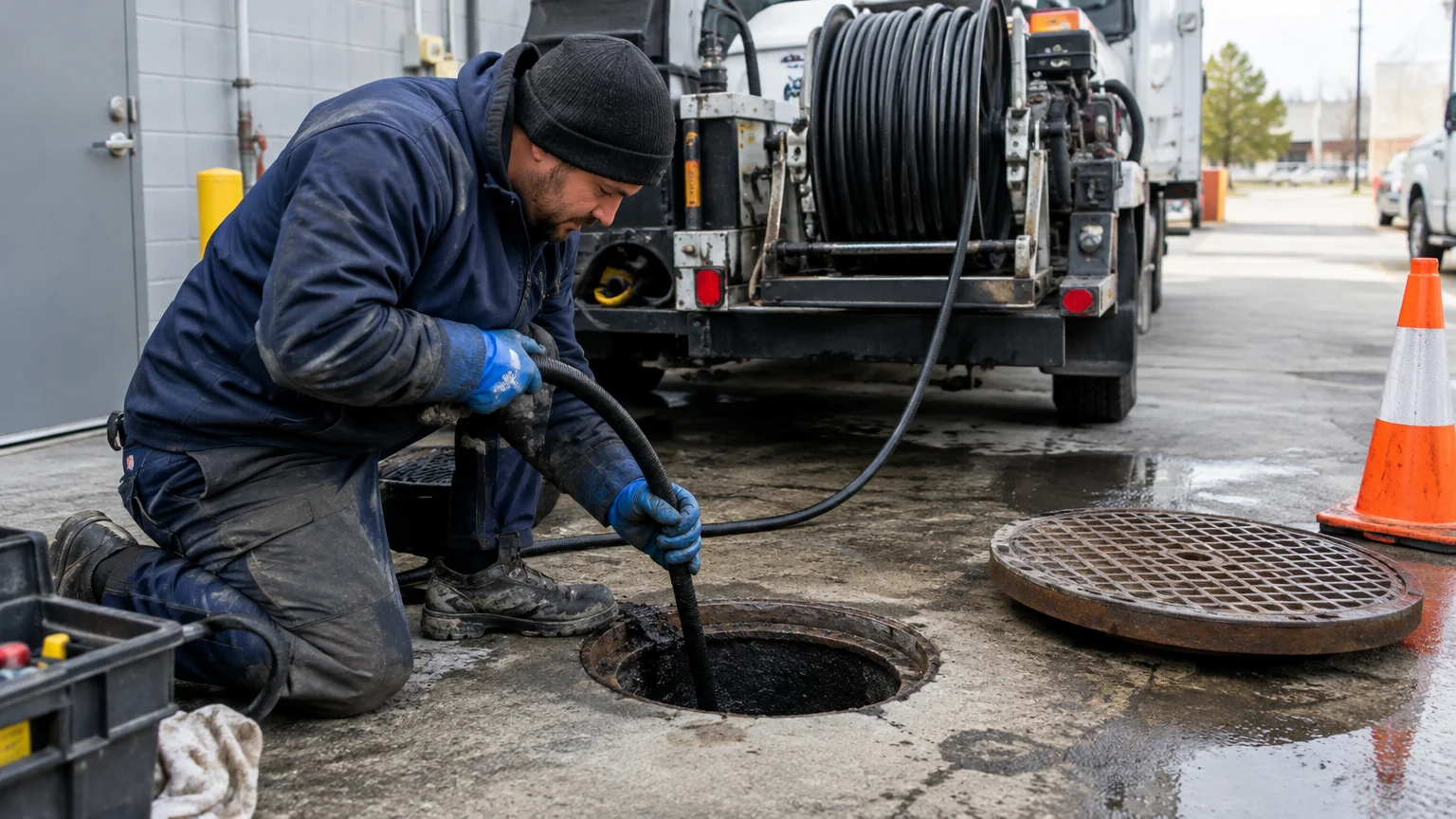
- What Is Hydro Jetting for Commercial Drains?
- What Commercial Drain Problems Can Hydro Jetting Solve?
- When Is Hydro Jetting Worth It for a Business?
- How Does a Plumber Decide Whether Hydro Jetting Is Safe?
- What Happens During Commercial Hydro Jetting?
- How Does Hydro Jetting Compare With Other Drain-Cleaning Options?
- How Can Businesses Prevent Future Drain and Sewer Blockages?
- Frequently Asked Questions
- Key Takeaways
- Conclusion
What Is Hydro Jetting for Commercial Drains?
Hydro jetting uses a hose and nozzle to send water through a drain at high pressure. The water can loosen buildup on pipe walls and move debris through the line. A trained plumber controls the equipment and picks a method that suits the pipe and blockage.
How does high-pressure water clear buildup?
A hydro jetter is a machine that pumps water through a hose and a special nozzle. The nozzle sends water forward and backward. This can break up material and wash it toward an open drain access point. A plumber may use it on suitable building drains or sewer lines after checking them.
Hydro jetting drain cleaning can clear some material that a basic pass through the pipe might leave behind. It may help remove grease, soap residue, sediment, and other buildup. The result depends on what caused the clog, the pipe’s condition, and whether the material can be flushed away safely.
How is hydro jetting different from drain snaking?
A drain snake uses a flexible cable to reach and break through a clog. It can help with one blockage or an obstruction near an access point. Hydro jetting works in another way: when the pipe is suitable, water can clean more of its inner surface.
Neither method fits every drain problem. A plumber may use a camera to see where the clog is and what may be causing it. Then the plumber can choose a safe tool. Highland Village Plumbing can explain the options to commercial property owners. The right choice depends on the pipe, not only the size of the clog.
What Commercial Drain Problems Can Hydro Jetting Solve?
Hydro jetting may help with clogs caused by grease, scale, sediment, and other material inside suitable pipes. It may be considered for repeat drain trouble in kitchens, restrooms, and some main sewer lines. A plumber should find the cause before choosing a way to clean the line.
Can jetting clear grease, scale, and recurring clogs?
Grease can stick to pipe walls and catch food scraps. Soap residue and sediment can also build up over time. Mineral scale is a hard layer that forms inside some pipes. When buildup narrows a drain, water may flow slowly or stop.
Hydro jetting may clear these deposits when the pipe is in good enough shape. But a clog may also come from a broken pipe, a root, or an object that should not be pushed farther down. Clearing the symptom without finding the cause can lead to another backup.
Which parts of a commercial property may need attention?
Commercial kitchens can send fats, oils, food scraps, and cleaning residue into drains. Restrooms may clog when paper products or other items are flushed. Shared or main sewer lines collect waste from many fixtures, so a blockage can affect several areas.
The signs can help a plumber find the source. One slow sink may point to a local clog. Several slow or gurgling fixtures, or more than one backup, may point to a larger line problem. If wastewater is rising or spreading, stop using the affected fixtures and arrange prompt help.
When Is Hydro Jetting Worth It for a Business?
Hydro jetting may be worth considering when clogs return, several drains slow down, or grease and buildup keep disrupting work. It may also suit planned cleaning if a plumber finds buildup in a sound pipe. The plumber should weigh the clog, pipe condition, and effect on the business.
When do recurring clogs point to a larger issue?
A clog that returns may mean material remains on the pipe walls, or that the first cleaning did not reach the cause. Several slow drains can point to a shared branch or main line problem. A sewer backup, bad smell, or water rising through a floor drain also needs prompt attention.
These signs do not prove that hydro jetting is the right answer. A camera check or other inspection can show buildup, damage, or an object blocking the flow. That information helps the plumber suggest drain cleaning, a focused repair, or another useful step.
Can planned cleaning reduce business disruption?
Some businesses plan drain checks based on how their systems are used. A busy kitchen may need a different plan from an office with light use. A plumber can review the property’s drain history and suggest a sensible plan instead of guessing.
Work planned around opening hours may limit disruption, but timing depends on access and pipe condition. Keep notes about repeat clogs, backup spots, and changes in drainage. Highland Village Plumbing can talk with local businesses about drain concerns and possible next steps. Each property may need a different plan.
How Does a Plumber Decide Whether Hydro Jetting Is Safe?
A plumber checks the drain before using high-pressure water. This may mean asking about past problems, finding an access point, and looking inside the pipe. If the pipe is damaged or weak, the plumber may suggest a gentler method or a repair instead.
Why inspect the drain and pipe first?
A drain camera is a small camera on a flexible cable. It lets a plumber look inside the pipe and find buildup, cracks, shifts, or other trouble. This check helps show if the line can handle jetting and where the problem sits.
The plumber may also check the pipe material, its age if known, and past repairs. A slow fixture does not show the full state of the line. A careful check can lower the chance of sending strong water at a weak spot. It can also help the business understand what caused the clog.
When might another approach be safer?
Old, cracked, corroded, or weak pipes may not suit high-pressure cleaning. A shifted or collapsed pipe needs more than a wash. The plumber may suggest a camera check, cable cleaning, a spot repair, or replacement, based on what the inspection finds.
Ask what the plumber found and why the suggested method fits. It is fair to ask if the line needs cleaning, repair, or more checks. If wastewater reaches areas used by staff or customers, keep people out of that space while arranging professional help. For urgent backups, emergency plumbing may be needed.
What Happens During Commercial Hydro Jetting?
A plumber usually finds the affected line, checks access, and picks equipment for the pipe and clog. The plumber then guides the hose through the line and checks whether the water flows better. The steps depend on the property, clog location, and inspection results.
How do inspection and access guide the work?
The plumber first talks through the symptoms and looks for a suitable cleanout or access point. A cleanout is an opening that gives access to a drain or sewer line. The plumber may use a camera before cleaning, especially if the pipe is hard to judge or the clog keeps coming back.
The hose, nozzle, and water pressure should match the job. The plumber considers the line’s size, material, and condition. Nearby fixtures and how the business will use the space also matter. Clear talk about the work helps the business plan for any areas that must stay closed.
How is cleaning checked afterward?
During cleaning, the plumber feeds the hose into the line and works to remove buildup. Afterward, the plumber may check the flow or look inside the pipe again. A clear drain is a good sign, but it does not mean a damaged pipe has been fixed or that clogs cannot return.
Ask what the plumber found, what was cleared, and whether more work is needed. If the same signs return, report them and share notes from earlier visits. A record of affected fixtures and past work can help the plumber spot a pattern and make a better choice.
How Does Hydro Jetting Compare With Other Drain-Cleaning Options?
Hydro jetting cleans with water, while a drain snake uses a cable to break through or remove a clog. A plumber may choose either method based on the blockage and pipe condition. If the line is cracked, collapsed, or damaged in another way, repair or replacement may help more than cleaning alone.
When is a snake the better choice?
A mechanical snake can work well for a local clog, such as material caught near a sink or toilet. It may restore flow without cleaning the full pipe wall. A plumber can choose a cable and tool that suit the fixture and blockage.
Hydro jetting may be considered when buildup runs along a suitable drain or the same line keeps clogging. It is not always the stronger or better choice. Ask why the method fits the problem and what signs would mean another step is needed.
When does a drain need repair instead?
Cleaning removes or loosens material inside a pipe. It cannot mend a crack, fix a poor connection, or replace a collapsed section. If a camera check finds damage, the plumber may discuss drain repair or replacement instead of more cleaning.
When comparing options, focus on the cause and likely result, not only the tool. Ask if the suggested work fixes the problem or only restores flow for now. Drain Cleaning may help with buildup and clogs, while Sewer Line Repair may be needed if the pipe itself is damaged.
How Can Businesses Prevent Future Drain and Sewer Blockages?
Good daily habits can reduce grease, scraps, and waste entering commercial drains. Regular checks may also catch slow flow before it turns into a backup. Each business should set rules that fit its fixtures, kitchen needs, and past drain problems.
What daily habits help protect drains?
Staff can follow clear rules for sinks, floor drains, and toilets. Simple steps may help prevent common clogs:
- Keep food scraps, coffee grounds, and solid waste out of sinks.
- Put cooking grease in an approved container instead of pouring it down a drain.
- Use drain strainers where they fit, and clean them often.
- Do not flush wipes, paper towels, or items that do not break down like toilet paper.
- Report slow drains, gurgling, and sewer smells before the problem spreads.
A grease trap catches fats, oils, and grease before wastewater enters the sewer line. Food businesses should keep it clean and follow a care plan that fits their system. Staff training matters too. One clear routine can help stop repeated misuse of drains.
How should a business plan inspections and cleaning?
A plumber can review past clogs, building use, and the drain layout with a property owner. That information can guide checks and planned care. One schedule does not suit every business, so the plan should match the property and change when problems do.
Keep service notes together, including which fixtures were affected and what work was done. Make sure staff know who should report a backup and which areas must stay clear. Highland Village Plumbing can help businesses understand drain concerns and consider suitable care or repair options.
Frequently Asked Questions
Is hydro jetting safe for every commercial drain?
No. Hydro jetting does not suit every pipe. A plumber should check its condition, material, and access before using high-pressure water. Cracked, collapsed, or weak pipes may need another cleaning method or repair. An inspection helps guide the choice and lower the risk of more damage.
Can hydro jetting remove grease from a commercial kitchen drain?
It may remove grease and related buildup from a suitable line. First, the plumber should check how far the clog runs and whether the pipe is sound. Good grease handling and care for the property’s grease trap can also help prevent repeat clogs.
Is hydro jetting better than snaking a drain?
Neither method is best for every clog. Snaking may help with a local blockage, while hydro jetting may clean buildup along a suitable pipe. The right choice depends on the cause, location, and pipe condition. A plumber can explain which method fits the inspection results.
How can a business tell if a main sewer line is blocked?
Several slow drains, gurgling fixtures, sewer smells, or wastewater coming through a floor drain can point to a shared line problem. Other issues can cause these signs, so a plumber should inspect the system. Stop using affected fixtures if wastewater backs up into the property.
Can a business prevent commercial drain clogs?
A business can reduce clogs by keeping grease, food scraps, and unsuitable waste out of drains. Staff should report slow flow and odd sounds early. Regular checks may find problems as they start, but the right plan depends on the building, its use, and its drain history.
Key Takeaways
- Hydro jetting uses controlled water pressure to clean suitable pipes.
- A plumber should check pipe condition before choosing this method.
- Repeat clogs may need an inspection to find their cause.
- Damaged pipes may need repair instead of more cleaning.
- Grease control and clear staff rules can help prevent blockages.
Conclusion
Hydro jetting can help clear grease and buildup from some commercial drains, but it is not right for every line. A plumber should inspect the pipe, explain the cause, and compare cleaning with repair when needed. Good daily habits and clear service notes can also help businesses manage drain problems in Highland Village. These drain issues can affect businesses across Highland Village.
Contact us to discuss commercial drain cleaning or a recurring blockage with Highland Village Plumbing.