To learn how to choose a bathroom faucet, first check your sink’s holes, basin size, and available space. Then think about who uses the sink and what features make daily use easier. A good fit can help prevent leaks, splashing, and problems with the plumbing below the basin.
A faucet affects how your bathroom looks and works each day. The right choice depends on more than its style or finish. Sink design, water flow, handle access, and the plumbing below the basin all matter. These checks can help homeowners, landlords, and property managers compare fixtures with care.
Table of Contents
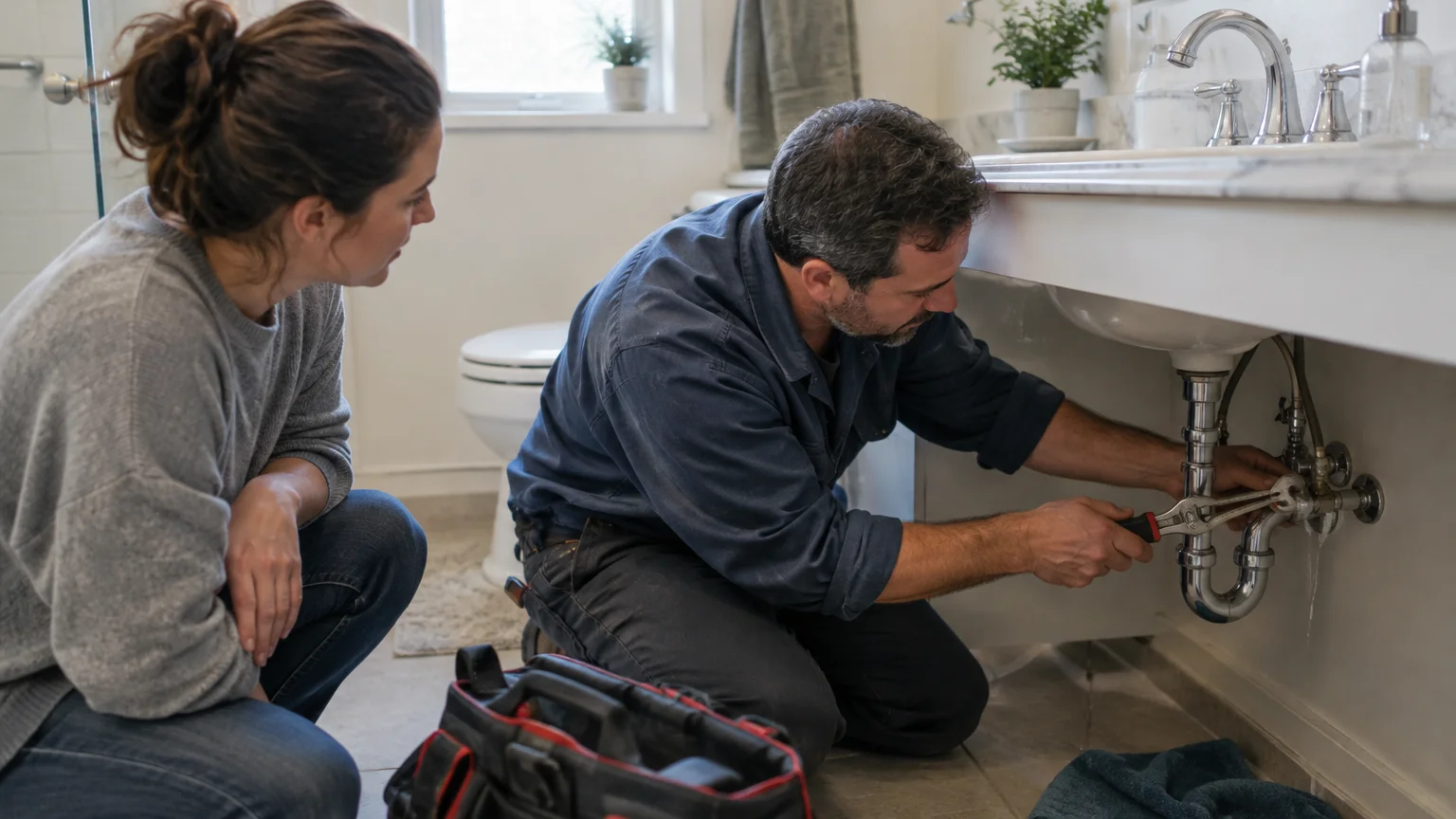
- How do you choose the right bathroom faucet?
- How do you check whether a faucet fits your sink?
- Which bathroom faucet style and handle type should you choose?
- Which faucet materials and finishes hold up best?
- How can you choose a water-efficient bathroom faucet?
- Should you repair or replace your bathroom faucet?
- What should you consider before installing a new bathroom fixture?
- Frequently Asked Questions
- Key Takeaways
- Conclusion
How do you choose the right bathroom faucet?
Choose a faucet that fits the sink, works for its users, and is easy to care for. Before you look at styles, check the basin and think about daily use. A guest bathroom may need a simple, sturdy faucet. A shared family bathroom may need handles that children and older adults can use with ease.
Step 1: Check the sink and current faucet
Look at the sink’s holes, its shape, and the space around it. If you are replacing an old faucet, note how it is fixed in place and where its handles sit. The new fixture must suit these details unless you are changing the sink or counter too.
Step 2: Think about daily use
Think about how often people use the sink and who needs to reach it. Check whether the handles are easy to move and control. A single handle can make water changes simple with one hand. Separate handles can give clear hot and cold control, but they need more room.
Step 3: Set your priorities
Decide what matters most before comparing faucets. You may want easy cleaning, simple controls, a certain look, or less water use. A short list of needs helps you focus on useful features. It can also help you skip details that will not matter during everyday use.
Bathroom plumbing fixtures include faucets, sinks, drains, and the pipes that carry water. These parts must work together. A faucet may look right in a store but still be a poor fit for a shallow sink or a tight counter. A poor fit can also lead to splashes or trouble using the handles.
In Highland Village, homes and other properties can have different sink styles and plumbing layouts. Highland Village Plumbing can help property owners review a fixture when planning a repair or replacement. Choose a faucet that suits the room and the people who use it, rather than choosing only by the latest look.
How do you check whether a faucet fits your sink?
Check the number of sink holes, their spacing, and the faucet’s mounting style before you buy. Then compare the faucet’s height and reach with the basin. These checks help prevent a faucet from covering the wrong holes, splashing water, or getting in the way.
Match holes and mounting style
Some sinks have one hole for a faucet. Others have three holes for the spout and handles. A centerset faucet has its spout and handles joined on one base. A widespread faucet has separate parts that sit farther apart. A wall-mounted faucet attaches to the wall, so the sink and water lines must suit that setup.
Do not expect a cover plate to fix every mismatch. A deck plate can cover extra holes on some sinks, but it will not suit every faucet or basin. Check the product guide and your sink details before you buy. If the sink is already in place, count its holes and take a clear photo to help compare options.
Check reach, height, and clearance
The spout should send water toward the middle of the basin, not onto its edge. A short spout can make washing your hands awkward. A long spout may send water onto the counter. The basin’s depth and shape affect where the water stream lands.
Check the room behind the faucet too. A tall spout or handle may hit a wall, mirror, shelf, or cabinet. Under the sink, look for enough space around the water lines and shutoff valves. These valves turn water to the faucet off and on. Tight cabinets can make repairs or installation harder.
Write down the sink’s hole pattern and read the product instructions before picking a fixture. If you plan to replace the sink or counter, choose those items together. This helps the faucet, basin, and bathroom plumbing work as one setup. A careful fit check can prevent changes after the new fixture arrives.
Which bathroom faucet style and handle type should you choose?
Choose a faucet style that matches the sink holes and the space around the basin. Single-hole and centerset faucets work well on many small sinks. Widespread and wall-mounted models need more room and planning. Choose handles that the people in your home can control with ease.
A single-hole faucet has the spout and handle together in one opening. This style can leave a small vanity feeling less crowded. A centerset faucet keeps the parts close together too, but its spout and handles share a base. Both styles can suit a sink with limited counter space.
A widespread faucet has a separate spout and handles. It can suit a larger sink or counter, but the sink holes must match the fixture’s spacing. A wall-mounted faucet can leave more counter space clear and give the room a simple look. Its water lines must come through the wall at the right place, so it is often easiest to plan during a bathroom update.
A single-handle faucet lets a person change the water with one control. This can help someone with limited hand strength or movement. A two-handle faucet has separate controls for hot and cold water. Some people like this clear split, though it can take more steps to set the water.
Think about the whole room before choosing a style. A high spout may work well with a deep basin, but it can splash in a shallow one. A wide faucet may look too large on a small sink. Bring the sink’s product details or a clear photo when you compare fixtures.
The faucet is only one part of bathroom plumbing. The sink, drain, supply lines, and shutoff valves all affect how well it works. If a remodel moves the sink, the water lines and drain may need changes too. Bathroom Installations may be useful when you are planning a larger fixture update.
Which faucet materials and finishes hold up best?
Choose a faucet with a sturdy body, parts that work well, and a finish that suits your cleaning needs. Product details can tell you what the fixture is made from and how to care for it. The finish alone does not tell you how well the whole faucet is made.
Inside a faucet, a valve controls the flow and mix of hot and cold water. A ceramic disc valve uses smooth ceramic parts to control water. Other types use different moving parts. Read the product details and care guide, and check whether the maker has parts for that model.
The faucet body and handles may use different materials. Read the product details instead of judging only by how the surface looks. A well-fitted faucet should feel steady and should not wobble during normal use. Follow the maker’s instructions so the faucet is held firmly without damage.
Faucet finishes include shiny metal, dark, and brushed looks. Choose one that suits nearby fittings and is easy for you to clean. Some finishes show water spots or fingerprints more than others. Use a soft cloth and follow the care guide to protect the surface. Strong cleaners and rough scrubbers can harm some finishes.
In a busy shared bathroom, easy cleaning and available parts may matter more than a rare finish. In a guest bathroom, matching the faucet to the sink and other fittings may matter more. The right choice depends on how people use the room and how much care the owner wants to give it.
Read the warranty and installation instructions before buying. Keep the model details in a safe place for later. If the faucet leaks, its make and model can help you find a suitable repair part. Clear product details can also help a plumber check whether the fixture can be repaired.
How can you choose a water-efficient bathroom faucet?
Look for a faucet that uses water wisely and still gives a comfortable stream. Its flow rate tells how much water can come through over time. Compare the product details and, if you can, try the stream. Check that it feels right for washing hands and normal sink use.
Some faucets have an aerator, a small part at the spout that mixes air into the water. It can help shape a steady stream while using less water. Some models also have flow controls. Check the product guide to see how these parts work and whether the aerator can be cleaned or replaced.
The U.S. Environmental Protection Agency’s WaterSense program lists bathroom faucets and parts that meet its water-use and performance rules. The WaterSense bathroom faucets page explains the program and what to look for. This label can help you compare water use, along with fit, comfort, and care needs.
A water-saving faucet should still feel useful. If the stream seems weak, check whether dirt or mineral buildup is blocking the aerator. Turn the faucet off, then remove and rinse the aerator if the maker’s guide says you can. Do not force a part that will not turn, as this may harm the spout or finish.
Low water flow at several fixtures may point to a plumbing problem, not a faucet choice. Compare the flow at other taps and check that easy-to-reach shutoff valves are open. If the problem stays, a plumber can inspect the water supply and faucet. Bathroom sink drain cleaning may help a slow drain or clogs, but it will not fix low water flow from the faucet.
Should you repair or replace your bathroom faucet?
A faucet may be worth fixing when the problem is small and the needed part is available. Replacing it may make more sense when leaks return, parts are worn, or the fixture no longer suits the sink or its users. First find where the water comes from. The leak may be at the faucet or below the basin.
A drip from the spout may come from worn parts inside or dirt in the faucet. Water around the base may mean the fixture is loose, a seal is worn, or water is splashing from the basin. Moisture under the sink may come from a water line, drain, or faucet body. Dry the area and watch where water shows up, but do not ignore a leak that keeps coming back.
Rust, cracks, loose handles, or hard-to-turn controls can also point to a problem. Mineral buildup may slow the water or make a handle stiff. You can wipe the faucet and clean a removable aerator if the maker’s guide allows it. You do not need a plumber for simple cleaning or safe basic checks when no active leak is present.
Turn off the water at the shutoff valves before opening a faucet connection. If a valve will not turn, a pipe is damaged, or water keeps leaking, stop and get help. Do not force old fittings. Forcing them can turn a small repair into a larger leak or other damage.
Think about replacement if the faucet is badly rusted, leaks from its body, or has parts you cannot find. Sink Repair may help with sink leaks and drainage problems. Faucet repair or replacement may be needed when the fixture itself is at fault. The right choice depends on the problem, sink condition, and whether a matching fixture or part is available.
A slow drain is different from a faucet leak. A clog may need drain cleaning or drain repair, while water coming from a faucet connection needs attention at that connection. If water is escaping quickly or causing damage, treat it as an urgent plumbing problem. Finding the source first helps you choose the right next step.
What should you consider before installing a new bathroom fixture?
Before installing a new fixture, make sure it fits the sink and the water can be shut off safely. Read the maker’s instructions, clear the cabinet, and look at the visible water lines and drain. Careful preparation can help prevent loose fittings, poor seals, and water damage.
Prepare the sink and plumbing
Take items out from under the sink and check the shutoff valves. Look for rust, drips, or signs of an older leak. Keep a towel and small bowl nearby to catch water in the lines. If a shutoff valve does not work, do not depend on it to stop water during the job.
Know when to get help
A confident homeowner may be able to replace a faucet when the pipes are in good shape and the instructions are clear. Professional help is a safer choice when pipes are rusty, valves are stuck, the fixture does not fit, or the pipes need to move. A plumber can check that the connections are firm and the faucet does not leak.
After installation, turn the water on slowly. Look for drips at the water line connections and around the faucet base. Run both hot and cold water, then check under the sink again. If water appears where it should not, turn off the valves if it is safe and fix the leak before using the faucet as usual.
A bathroom update can involve more than a faucet. A new sink can change where the drain sits. Moving a fixture may mean changing pipes behind a wall or under the floor. A plumbing diagram can show how the pipes and fixtures fit together, but it may not match an older home. Check the real pipe layout before work begins.
Highland Village Plumbing serves property owners who need help with faucet repairs, replacement, or installation. The homes and buildings in Highland Village can have different fixtures and pipe layouts, so check the actual setup before choosing the work.
Frequently Asked Questions
How do you know if a faucet will fit your sink?
Check how many holes the sink has and how far apart they are. Find out whether the faucet sits on the sink, counter, or wall. Compare these details with the faucet’s installation guide. Also check the spout reach, basin depth, and space behind the faucet for handles or a nearby wall.
What causes low water pressure at a bathroom faucet?
A blocked aerator, partly closed shutoff valve, or worn faucet part can slow water at one sink. If several fixtures have low flow, the problem may be elsewhere in the plumbing. Check valves that are easy to reach, and clean a removable aerator only as the maker directs. Get help if the problem continues.
Can a homeowner replace a bathroom faucet?
A homeowner may replace a faucet when the shutoff valves work, the pipes are sound, and the new fixture fits. Follow the maker’s instructions and check for leaks after turning the water back on. Get professional help if a valve is stuck, pipes are rusty, or the connections do not match.
Should a dripping faucet be repaired or replaced?
A drip may stop after cleaning or replacing a worn part, if the faucet is in good shape and the part is available. Replacement may be a better choice if the body is damaged, rust is present, or leaks keep returning. Find the source first, since water may be coming from a connection below the sink.
How can a bathroom faucet use less water?
Choose a faucet with clear flow details and consider one recognized by the WaterSense program. An aerator can shape the stream and may be removed for cleaning. A water-saving faucet should still suit the household, so compare its listed features and how it feels during normal use.
Key Takeaways
- Check sink holes, mounting style, basin depth, and faucet reach before you buy.
- Choose handles, height, and finish based on daily use and cleaning needs.
- Compare water-use details and features such as aerators.
- Clean an easy-to-reach aerator and check safe shutoff valves yourself.
- Get help for stuck valves, damaged pipes, or leaks that keep returning.
Conclusion
The best bathroom faucet fits the sink, works well for its users, and is simple to care for. Check the holes, spout reach, handles, finish, and water flow before choosing a fixture. These steps can help prevent a poor fit and make it easier to spot plumbing issues.
For help with faucet repair, replacement, or installation, Contact us today to discuss the work needed with Highland Village Plumbing.
If you are not sure what you are dealing with, it is worth having someone look at it before it turns into a bigger job. Get in touch with Highland Village Plumbing today and we will tell you where you stand.